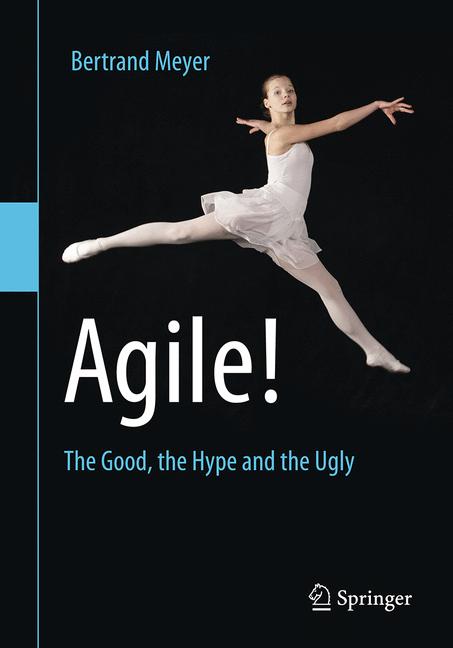
Agile!
The Good, the Hype and the Ugly
Springer/Sci-Tech/Trade · Print & ebook · April 22, 2014
Are you attracted by the promises of agile methods but put off by the fanaticism of many agile texts?
We earn from qualifying purchases.
- Genres
- Software Project Management, Software Development, Programming Basics
- Published
- Springer/Sci-Tech/Trade, April 22, 2014
Nearest books
Matched by what the books are about, then ordered by what their readers also loved. Most of these share its genre: Software Project Management.
 The Mythical Man-monthFrederick P. Brooks Jr.53% matchAlso shares Programming Basics
 Head First Design PatternsEric Freeman, Elisabeth Robson51% match
 Agile Project ManagementJim Highsmith70% match
 Domain-driven DesignEric Evans54% matchAlso shares Software Development
 Learning AgileAndrew Stellman, Jennifer Greene78% matchAlso shares Software Development
 Agile Project Management for DummiesMark C. Layton, Steven J. Ostermiller66% match
 Agile Software Development With SCRUMKen Schwaber, Mike Beedle65% matchAlso shares Software Development
 Smalltalk Best Practice PatternsKent Beck49% match
Start with three books, and this one can be the first.
Members get a new edition every morning: a route out from their books to essays, research and talks, with the reason for each.
Start with this bookAbout this book
Are you attracted by the promises of agile methods but put off by the fanaticism of many agile texts? Would you like to know which agile techniques work, which ones do not matter much, and which ones will harm your projects? Then you needAgile!: the first exhaustive, objective review of agile principles, techniques and tools. Agile methods are one of the most important developments in software over the past decades, but also a surprising mix of the best and the worst.
Continue reading
Until now every project and developer had to sort out the good ideas from the bad by themselves. This book spares you the pain. It offers both a thorough descriptive presentation of agile techniques and a perceptive analysis of their benefits and limitations. Agile!serves first as aprimer on agile development : one chapter each introduces agile principles, roles, managerial practices, technical practices and artifacts. A separate chapter analyzes the four major agile methods: ExtremeProgramming, Lean Software, Scrum and Crystal. The accompanyingcritical analysis explains what you should retain and discard from agile ideas. It is based on Meyer's thorough understanding of software engineering, and his extensive personal experience of programming and project management. He highlights the limitations of agile methods as well as their truly brilliant contributions - even those to which their own authors do not do full justice. Three important chapters precede the core discussion of agile ideas: an overview, serving as a concentrate of the entire book; a dissection of the intellectual devices used by agile authors; and a review of classical software engineering techniques, such as requirements analysis and lifecycle models, which agile methods criticize. The final chapters describe the precautions that a company should take during a transition to agile development and present an overall assessment of agile ideas. This is the first book to discuss agile methods, beyond the brouhaha, in the general context of modern software engineering. It is a key resource for projects that want to combine the best of established results and agile innovations.
Where it sits
| Software Project Management | 71% |
|---|---|
| Software Development | 41% |
| Programming Basics | 35% |
Percentages are BookFrontier’s reading of the book.
Publisher categories
- Management
- Information Management
- Programming Basics
- Authors
- Bertrand Meyer
- Publisher
- Springer/Sci-Tech/Trade
- Published
- April 22, 2014
- Format
- Print & ebook
- Reading lane
- Management