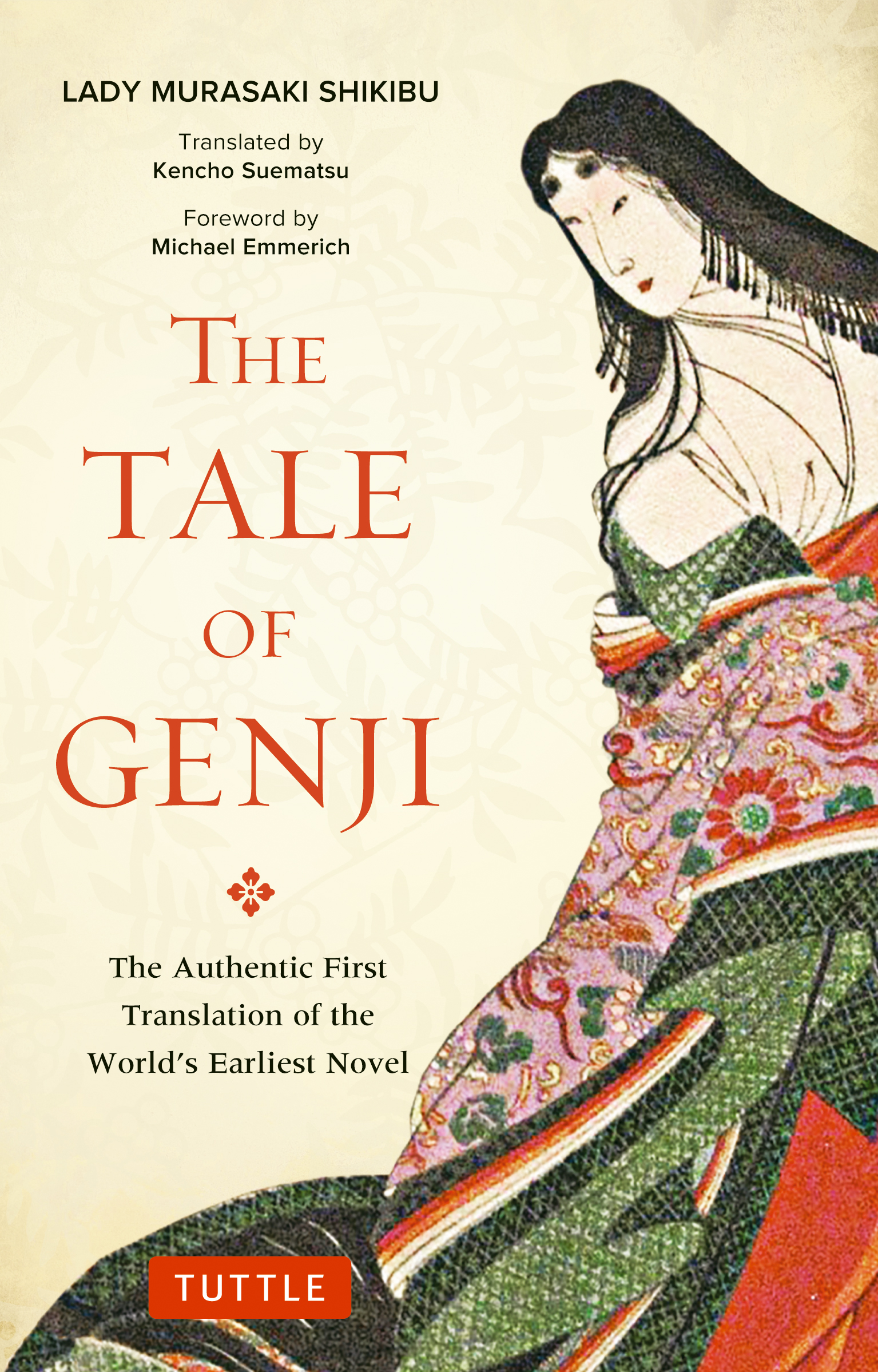
The Tale of Genji
The Authentic First Translation of the World's Earliest Novel
Tuttle Publishing · Print & ebook · April 3, 2018
The most famous work of Japanese literature and the world's first novel—written a thousand years ago and one of the enduring classics of world literature.
We earn from qualifying purchases.
- Who it’s for
- Enter a thousand-year-old work where courtly passions meet poetry, music, dance, and enduring cultural influence.
- Themes
- Romantic love, Heian court culture, Poetry
- Genres
- Japanese Fiction, The Classics, Japanese Literary Collections
Nearest books
Matched by what the books are about, then ordered by what their readers also loved.
 The Dawn of the Warrior AgeRoyall Tyler64% matchShares Japanese Literary Collections
 The GateNatsume Soseki54% matchShares Japanese Fiction and The Classics
 Five Women Who Loved LoveIhara Saikaku59% matchShares Japanese Fiction and Japanese Literary Collections
 The Wind-up Bird ChronicleHaruki Murakami, Jay Rubin50% matchShares Japanese Fiction
 Don QuixoteMiguel de Cervantes Saavedra46% matchShares The Classics
 DecameronGiovanni Boccaccio44% matchShares The Classics
For younger readers: Peach Boy and Other Japanese Children's Favorite Stories, Samurai Rising, Japanese Children's Favorite Stories
Start with three books, and this one can be the first.
Members get a new edition every morning: a route out from their books to essays, research and talks, with the reason for each.
Start with this bookAbout this book
The most famous work of Japanese literature and the world's first novel—written a thousand years ago and one of the enduring classics of world literature. Written centuries before the time of Shakespeare and even Chaucer, The Tale of Genji marks the birth of the novel—and after more than a millennium, this seminal work continues to enchant readers throughout the world.
Continue reading
Lady Murasaki Shikibu and her tale's hero, Prince Genji, have had an unmatched influence on Japanese culture. Prince Genji manifests what was to become an image of the ideal Heian era courtier; gentle and passionate. Genji is also a master poet, dancer, musician and painter. The Tale of Genji follows Prince Genji through his many loves and varied passions. This book has influenced not only generations of courtiers and samurai of the distant past, but artists and painters even in modern times—episodes in the tale have been incorporated into the design of kimonos and handicrafts, and the four-line poems called waka which dance throughout this work have earned it a place as a classic text in the study of poetry. This version by Kencho Suematsu was the first-ever translation in English. Condensed, it's a quarter length of the unabridged text. "Not speaking is the wiser part, And words are sometimes vain, But to completely close the heart In silence, gives me pain." —Prince Genji, in The Tale of Genji
A Courtly Classic
Enter a thousand-year-old work where courtly passions meet poetry, music, dance, and enduring cultural influence.
Come here for
- A landmark of Japanese literature with a long afterlife in art and culture
- Poetry woven through a tale of many loves and varied passions
Expect
- A layered classic shaped by courtly ideals
- A condensed first English translation, one quarter the unabridged length
Where it sits
| The Classics | 66% |
|---|---|
| Japanese Fiction | 57% |
| Japanese Literary Collections | 49% |
Percentages are BookFrontier’s reading of the book.
Publisher categories
- The Classics
- War Fiction
- Japanese Literary Collections
- Authors
- Murasaki Shikibu
- Publisher
- Tuttle Publishing
- Published
- April 3, 2018
- Format
- Print & ebook
- Theme
- Romantic love · Heian court culture · Poetry
- Reading lane
- The Classics