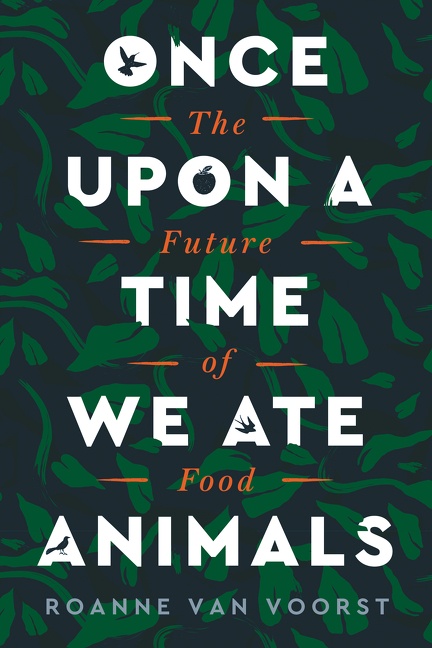
Once Upon a Time We Ate Animals
The Future of Food
HarperCollins · Print & ebook · December 13, 2022
Combining the ethical clarity of Jonathan Safran Foer’s Eating Animals with the disquieting vision of Alan Weissman’s bestseller The World Without Us, a thought-provoking, entertaining exploration of a future where animal consumption is a thing of the past.
We earn from qualifying purchases.
- Who it’s for
- A future-facing view of life after animal consumption makes familiar food choices feel newly debatable.
- Themes
- A future without animal consumption, Ethics and environmental impact of meat
- Genres
- Animal Rights, Vegan Cooking, Conservation
Nearest books
Matched by what the books are about, then ordered by what their readers also loved.
 Food RoutesRobyn S. Metcalfe, Donna Postel60% match
 SlaughterhouseGail A. Eisnitz56% matchShares Animal Rights
 How the Other Half EatsPriya Fielding-Singh PhD, Priya Fielding-Singh52% match
 HookedMichael Moss, Scott Brick50% match
 The Fate of FoodAmanda Little70% match
 Animal, Vegetable, JunkMark Bittman65% match
 The Omnivore's DilemmaMichael Pollan, Scott Brick64% match
For younger readers: What the World Eats, The Story of Seeds, Eyes Wide Open: Going Behind the Environmental Headlines
Start with three books, and this one can be the first.
Members get a new edition every morning: a route out from their books to essays, research and talks, with the reason for each.
Start with this bookAbout this book
Combining the ethical clarity of Jonathan Safran Foer’s Eating Animals with the disquieting vision of Alan Weissman’s bestseller The World Without Us, a thought-provoking, entertaining exploration of a future where animal consumption is a thing of the past. Though increasing numbers of people know that eating meat is detrimental to our planet’s health, many still can’t be convinced to give up eating meat.
Continue reading
But how can we change behavior when common arguments and information aren’t working? Acclaimed anthropologist Roanne Van Voorst changes the dialogue. In Once Upon a Time We Ate Animals, she shifts the focus from the present looking forward to the future looking back—imagining a world in which most no longer use animals for food, clothing, or other items. By shifting the viewpoint, she offers a clear and compelling vision of what it means to live in a world without meat. A massive shift is already taking place—everything van Voorst covers in this book has already been invented and is being used today by individuals and small organizations worldwide. Hopeful and persuasive, Once Upon a Time We Ate Animals offers a tantalizing vision of what is not only possible but perhaps inevitable.
Food, Reimagined
A future-facing view of life after animal consumption makes familiar food choices feel newly debatable.
Come here for
- A shift from arguing about today to imagining what comes next
- Questions about food, ethics, and changing habits
Expect
- A hopeful, persuasive vision of a world without animal products
- A thought-provoking look at possibilities already in use
Where it sits
| Animal Rights | 71% |
|---|---|
| Conservation | 34% |
| Vegan Cooking | 33% |
Percentages are BookFrontier’s reading of the book.
Publisher categories
- Vegan Cooking
- Plants
- Wildlife
- Animal Rights
Show all 8 publisher categories
- Mental Health
- History of Science
- Time (Science)
- How Cultures Work
- Authors
- Roanne van Voorst
- Publisher
- HarperCollins
- Published
- December 13, 2022
- Format
- Print & ebook
- Theme
- A future without animal consumption · Ethics and environmental impact of meat
- Reading lane
- Vegan Cooking