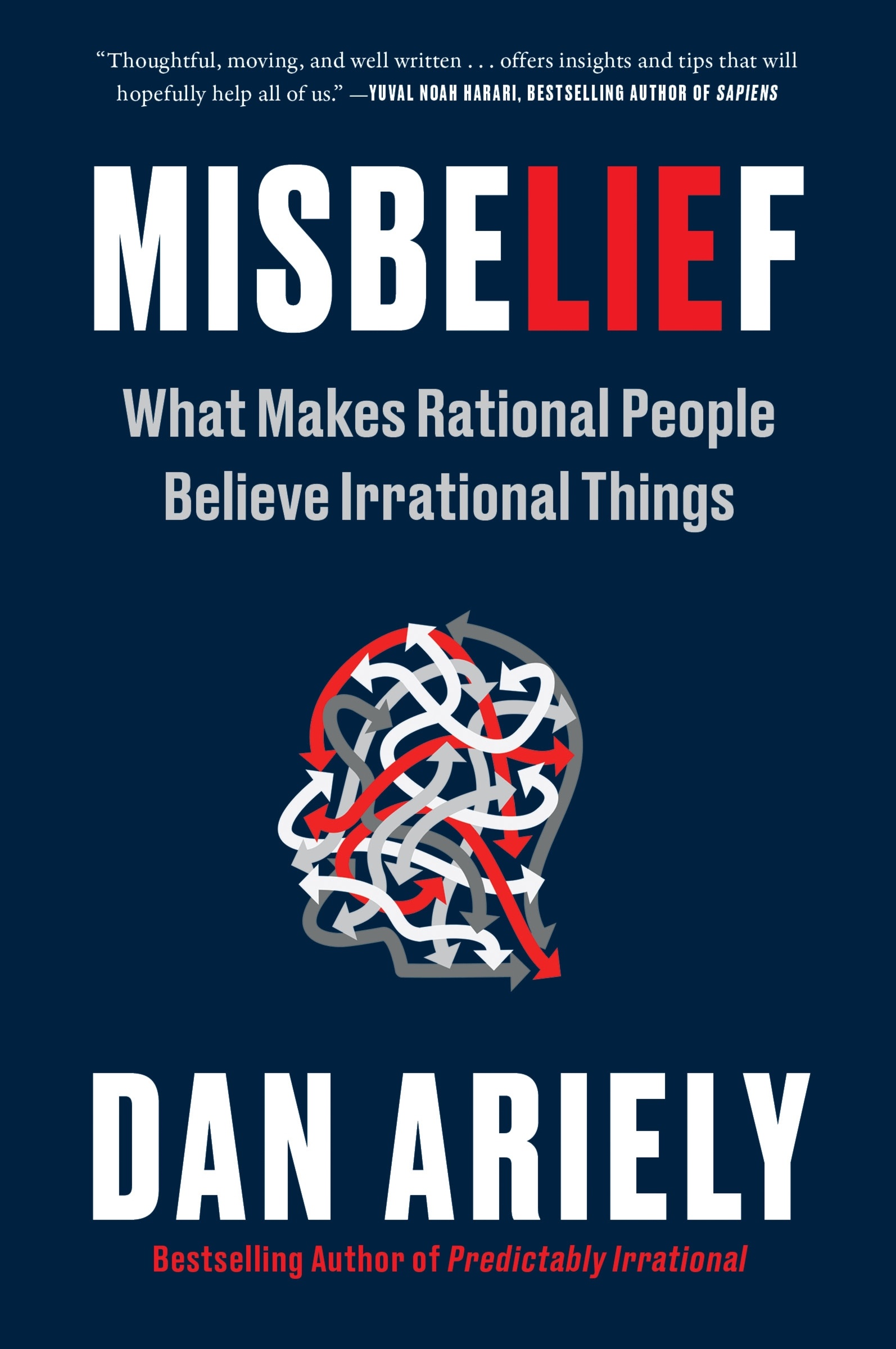
Misbelief
What Makes Rational People Believe Irrational Things
HarperCollins · Print & ebook · September 17, 2024
“In this thoughtful, moving, and well-written book, Dan Ariely narrates his personal and professional journey to understand the world of misbelievers and conspiracy theories, and offers insights and tips that will hopefully help all of us protect our fragile social fabric from being torn apart by disinformation and distrust.”—Yuval Harari, bestselling author of Sapiens “Misbelief is an urgent examination of the human attraction to misinformation.
We earn from qualifying purchases.
- Who it’s for
- A psychological look at misinformation that treats misbelief as a human problem, not a partisan defect.
- Themes
- Misinformation and disinformation, Psychology of belief, Conspiracy theories
- Genres
- Social Psychology, How We Think & Learn, Science & Society
Nearest books
Matched by what the books are about, then ordered by what their readers also loved. Most of these share its genre: Social Psychology.
 Invisible InfluenceJonah Berger59% match
 How Minds ChangeDavid McRaney, Penguin Audio70% matchAlso shares How We Think & Learn
 The Storytelling AnimalJonathan Gottschall54% matchAlso shares How We Think & Learn
 DecisiveChip Heath, Dan Heath54% matchAlso shares How We Think & Learn
 Predictably Irrational, Revised and Expanded EditionDan Ariely73% match
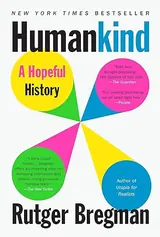 HumankindRutger Bregman, Erica Moore64% match
 Think AgainAdam Grant, Adam M. Grant61% matchAlso shares How We Think & Learn
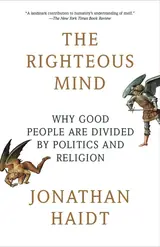 The Righteous MindJonathan Haidt59% match
For younger readers: What the Fact?, Big Lies, True or False
Start with three books, and this one can be the first.
Members get a new edition every morning: a route out from their books to essays, research and talks, with the reason for each.
Start with this bookAbout this book
“In this thoughtful, moving, and well-written book, Dan Ariely narrates his personal and professional journey to understand the world of misbelievers and conspiracy theories, and offers insights and tips that will hopefully help all of us protect our fragile social fabric from being torn apart by disinformation and distrust.”—Yuval Harari, bestselling author of Sapiens “Misbelief is an urgent examination of the human attraction to misinformation.
Continue reading
This timely book can provide a crucial foundation for building a more empathetic and informed society.”—Daniel H. Pink, #1 New York Times bestselling author of The Power of Regret The renowned social scientist, professor, and bestselling author of Predictably Irrational delivers his most urgent and compelling book—an eye-opening exploration of the human side of the misinformation crisis—examining what drives otherwise rational people to adopt deeply irrational beliefs. Misinformation affects all of us on a daily basis—from social media to larger political challenges, from casual conversations in supermarkets, to even our closest relationships. While we recognize the dangers that misinformation poses, the problem is complex—far beyond what policing social media alone can achieve—and too often our limited solutions are shaped by partisan politics and individual interpretations of truth. In Misbelief, preeminent social scientist Dan Ariely argues that to understand the irrational appeal of misinformation, we must first understand the behavior of “misbelief”—the psychological and social journey that leads people to mistrust accepted truths, entertain alternative facts, and even embrace full-blown conspiracy theories. Misinformation, it turns out, appeals to something innate in all of us—on the right and the left—and it is only by understanding this psychology that we can blunt its effects. Grounded in years of study as well as Ariely’s own experience as a target of disinformation, Misbelief is an eye-opening and comprehensive analysis of the psychological drivers that cause otherwise rational people to adopt deeply irrational beliefs. Utilizing the latest research, Ariely reveals the key elements—emotional, cognitive, personality, and social—that drive people down the funnel of false information and mistrust, showing how under the right circumstances, anyone can become a misbeliever. Yet Ariely also offers hope. Even as advanced artificial intelligence has become capable of generating convincing fake news stories at an unprecedented scale, he shows that awareness of these forces fueling misbelief make us, as individuals and as a society, more resilient to its allure. Combating misbelief requires a strategy rooted not in conflict, but in empathy. The sooner we recognize that misbelief is above all else a human problem, the sooner we can become the solution ourselves.
Why Beliefs Take Hold
A psychological look at misinformation that treats misbelief as a human problem, not a partisan defect.
Come here for
- Understand the emotional, cognitive, and social pulls behind false beliefs
- Ariely’s account of his own experience as a disinformation target
Expect
- A research-grounded explanation of how people come to mistrust accepted truths
- An appeal for empathy over conflict in responding to misbelief
Where it sits
| Social Psychology | 88% |
|---|---|
| How We Think & Learn | 49% |
| Science & Society | 23% |
Percentages are BookFrontier’s reading of the book.
Publisher categories
- Business Development
- Business Education
- Economic Theory
- Personal Success
Show all 8 publisher categories
- Social Psychology
- Behavioral Psychology
- History of Science
- Cultural Anthropology
- Authors
- Dr. Dan Ariely
- Publisher
- HarperCollins
- Published
- September 17, 2024
- Format
- Print & ebook
- Theme
- Misinformation and disinformation · Psychology of belief · Conspiracy theories
- Reading lane
- Business Development