
Humankind
A Hopeful History
Little, Brown and Company · Print & ebook · November 16, 2021
AN INSTANT NEW YORK TIMES BESTSELLER The “lively” (The New Yorker), “convincing” (Forbes), and “riveting pick-me-up we all need right now” (People) that proves humanity thrives in a crisis and that our innate kindness and cooperation have been the greatest factors in our long-term success as a species.
We earn from qualifying purchases.
- Who it’s for
- A hopeful, argument-driven look at what people are like—and why that matters.
- Genres
- Social Psychology, How We Evolved to Think, Ethics
- Published
- Little, Brown and Company, November 16, 2021
Nearest books
Matched by what the books are about, then ordered by what their readers also loved.
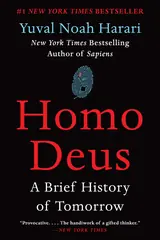 Homo DeusYuval Noah Harari66% match
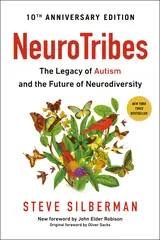 NeurotribesSteve Silberman, Oliver Sacks58% match
 Revenge of the Tipping PointMalcolm Gladwell, Little, Brown & Company64% matchShares Social Psychology
For younger readers: Unstoppable US, Volume 1: How Humans Took Over the World, Big Lies, Unstoppable US, Volume 2: Why the World Isn't Fair
Start with three books, and this one can be the first.
Members get a new edition every morning: a route out from their books to essays, research and talks, with the reason for each.
Start with this bookAbout this book
AN INSTANT NEW YORK TIMES BESTSELLER The “lively” (The New Yorker), “convincing” (Forbes), and “riveting pick-me-up we all need right now” (People) that proves humanity thrives in a crisis and that our innate kindness and cooperation have been the greatest factors in our long-term success as a species. If there is one belief that has united the left and the right, psychologists and philosophers, ancient thinkers and modern ones, it is the tacit assumption that humans are bad.
Continue reading
It's a notion that drives newspaper headlines and guides the laws that shape our lives. From Machiavelli to Hobbes, Freud to Pinker, the roots of this belief have sunk deep into Western thought. Human beings, we're taught, are by nature selfish and governed primarily by self-interest. But what if it isn't true? International bestseller Rutger Bregman provides new perspective on the past 200,000 years of human history, setting out to prove that we are hardwired for kindness, geared toward cooperation rather than competition, and more inclined to trust rather than distrust one another. In fact this instinct has a firm evolutionary basis going back to the beginning of Homo sapiens. From the real-life Lord of the Flies to the solidarity in the aftermath of the Blitz, the hidden flaws in the Stanford prison experiment to the true story of twin brothers on opposite sides who helped Mandela end apartheid, Bregman shows us that believing in human generosity and collaboration isn't merely optimistic—it's realistic. Moreover, it has huge implications for how society functions. When we think the worst of people, it brings out the worst in our politics and economics. But if we believe in the reality of humanity's kindness and altruism, it will form the foundation for achieving true change in society, a case that Bregman makes convincingly with his signature wit, refreshing frankness, and memorable storytelling. "The Sapiens of 2020." —The Guardian "Humankind made me see humanity from a fresh perspective." —Yuval Noah Harari, author of the #1 bestseller Sapiens Longlisted for the 2021 Andrew Carnegie Medal for Excellence in Nonfiction One of the Washington Post's 50 Notable Nonfiction Works in 2020
Why It Lands
A hopeful, argument-driven look at what people are like—and why that matters.
Come here for
- Optimistic social theory, with a historian’s eye
- Big questions about human nature, handled plainly
Expect
- Careful explanation over slogan
- A sturdy mix of history and economic thought
Where it sits
| Social Psychology | 30% |
|---|---|
| How We Evolved to Think | 25% |
| Ethics | 20% |
Percentages are BookFrontier’s reading of the book.
Publisher categories
- World History
- Civilizations
- History of Science
- How Cultures Work
Show all 5 publisher categories
- Social Theory
- Authors
- Rutger Bregman, Erica Moore, Elizabeth Manton
- Publisher
- Little, Brown and Company
- Published
- November 16, 2021
- Format
- Print & ebook
- Reading lane
- World History