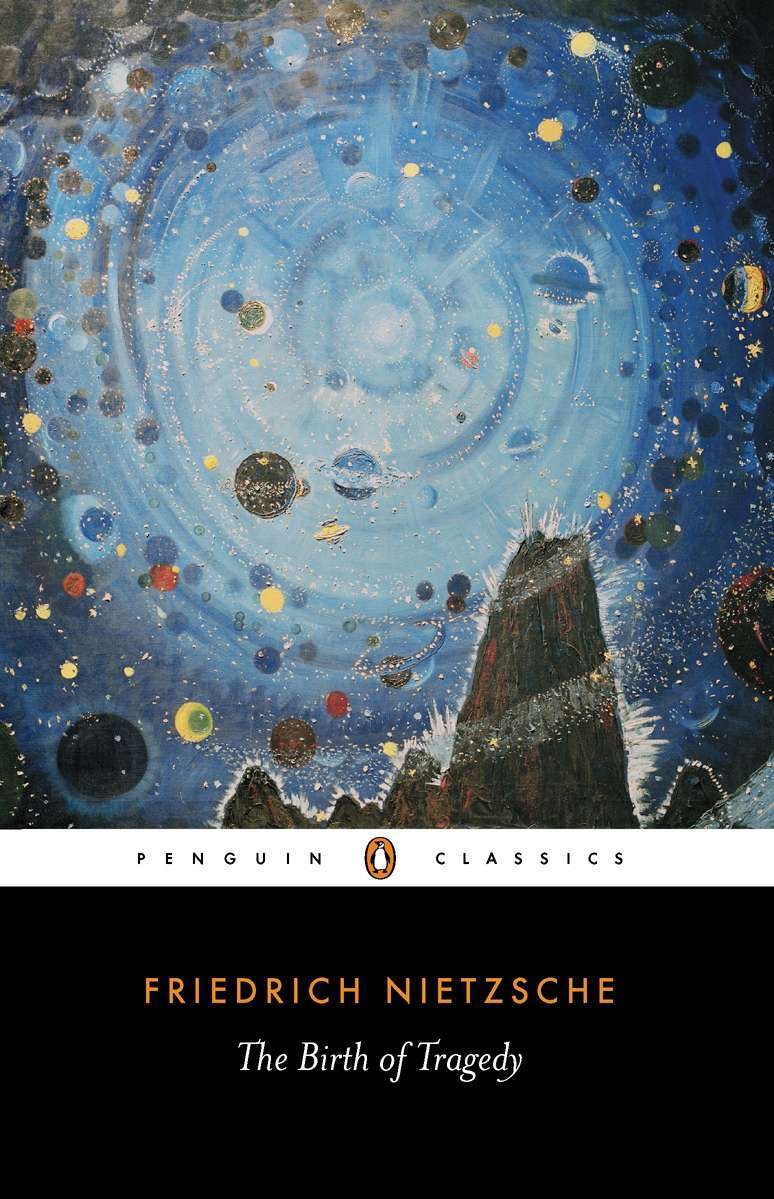
The Birth of Tragedy
Out of the Spirit of Music
Penguin Publishing Group · Print & ebook · January 1, 1994
The first book by the author of the classic philosophical text Beyond Good and Evil.
We earn from qualifying purchases.
- Who it’s for
- Nietzsche’s early meditation on tragedy challenges Victorian ideas of Greek culture and reaches into later debates.
- Themes
- Tragedy, Greek culture, Criticism of cultural ideas
- Genres
- Aesthetics, Drama Criticism, Ancient & Classical Literary Criticism
Nearest books
Matched by what the books are about, then ordered by what their readers also loved.
 Against NatureJoris-Karl Huysmans52% match
 Phenomenology of SpiritG. W. F. Hegel, A. V. Miller53% match
 Introductory Lectures on AestheticsGeorg Wilhelm Friedrich Hegel, Michael Inwood60% matchShares Aesthetics
 All Things ShiningHubert Dreyfus, Sean Dorrance Kelly54% match
 MontaigneStefan Zweig53% match
 A Theologico Political TreatiseBaruch Spinoza49% match
 IlluminationsWalter Benjamin54% matchShares Aesthetics
 Basic WritingsMartin Heidegger50% match
Start with three books, and this one can be the first.
Members get a new edition every morning: a route out from their books to essays, research and talks, with the reason for each.
Start with this bookAbout this book
The first book by the author of the classic philosophical text Beyond Good and Evil. The youthful faults of this work were exposed by the author himself in the brilliant Attempt at a Self-Criticism, which he added to the new edition of 1886. But the book, whatever its excesses, remains one of the most relevant statements on tragedy ever penned.
Continue reading
It exploded the conception of Greek culture that was prevalent down through the Victorian era, and it analyzed themes developed in the twentieth century by classicists, existentialists, psychoanalysts, and others.
Tragedy Reconsidered
Nietzsche’s early meditation on tragedy challenges Victorian ideas of Greek culture and reaches into later debates.
Come here for
- A philosophical rethinking of Greek tragedy
- Ideas that resonate with classicists and existentialists
Expect
- Bold claims, alongside excesses Nietzsche later acknowledged
- A contemplative encounter with Greek culture and its interpretation
Where it sits
| Aesthetics | 49% |
|---|---|
| Drama Criticism | 39% |
| Ancient & Classical Literary Criticism | 31% |
Percentages are BookFrontier’s reading of the book.
Publisher categories
- Ancient & Classical Literary Criticism
- Drama Criticism
- Aesthetics
- Authors
- Friedrich Nietzsche, Michael Tanner
- Publisher
- Penguin Publishing Group
- Published
- January 1, 1994
- Format
- Print & ebook
- Theme
- Tragedy · Greek culture · Criticism of cultural ideas
- Reading lane
- Ancient & Classical Literary Criticism