
Collapse
How Societies Choose to Fail or Succeed: Revised Edition
Penguin Publishing Group · Print & ebook · January 4, 2011
In Jared Diamond’s follow-up to the Pulitzer-Prize winning Guns, Germs and Steel, the author explores how climate change, the population explosion and political discord create the conditions for the collapse of civilization Environmental damage, climate change, globalization, rapid population growth, and unwise political choices were all factors in the demise of societies around the world, but some found solutions and persisted.
We earn from qualifying purchases.
- Who it’s for
- A broad, readable framework for thinking about why societies endure or unravel.
- Themes
- societal collapse, environmental impact, political decision-making
- Pacing
- Reflective
Nearest books
Matched by what the books are about, then ordered by what their readers also loved.
 Age of RevolutionsFareed Zakaria, Simon & Schuster Audio52% match
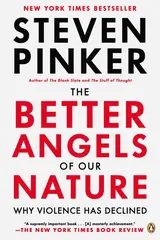 The Better Angels of Our NatureSteven Pinker, Arthur Morey53% match
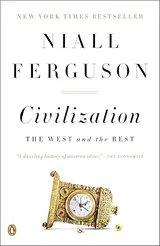 CivilizationNiall Ferguson54% match
For younger readers: 1493 for Young People, Eyes Wide Open: Going Behind the Environmental Headlines, How to Survive the End of the World
Start with three books, and this one can be the first.
Members get a new edition every morning: a route out from their books to essays, research and talks, with the reason for each.
Start with this bookAbout this book
In Jared Diamond’s follow-up to the Pulitzer-Prize winning Guns, Germs and Steel, the author explores how climate change, the population explosion and political discord create the conditions for the collapse of civilization Environmental damage, climate change, globalization, rapid population growth, and unwise political choices were all factors in the demise of societies around the world, but some found solutions and persisted.
Continue reading
As in Guns, Germs, and Steel, Diamond traces the fundamental pattern of catastrophe, and weaves an all-encompassing global thesis through a series of fascinating historical-cultural narratives. Collapse moves from the Polynesian cultures on Easter Island to the flourishing American civilizations of the Anasazi and the Maya and finally to the doomed Viking colony on Greenland. Similar problems face us today and have already brought disaster to Rwanda and Haiti, even as China and Australia are trying to cope in innovative ways. Despite our own society’s apparently inexhaustible wealth and unrivaled political power, ominous warning signs have begun to emerge even in ecologically robust areas like Montana. Brilliant, illuminating, and immensely absorbing, Collapse is destined to take its place as one of the essential books of our time, raising the urgent question: How can our world best avoid committing ecological suicide?
Why It Clicks
A broad, readable framework for thinking about why societies endure or unravel.
Come here for
- big-idea history at the scale of societies
- clear links between politics and nature
Expect
- concept-driven chapters
- best for class discussion or structured reading
Where it sits
| Climate Change | 36% |
|---|---|
| Cultural Anthropology | 32% |
| Environmental Science | 26% |
Percentages are BookFrontier’s reading of the book.
Publisher categories
- Civilizations
- Cultural Anthropology
- Futures & Foresight
- Authors
- Jared Diamond
- Publisher
- Penguin Publishing Group
- Published
- January 4, 2011
- Format
- Print & ebook
- Theme
- societal collapse · environmental impact · political decision-making
- Reading lane
- Civilizations