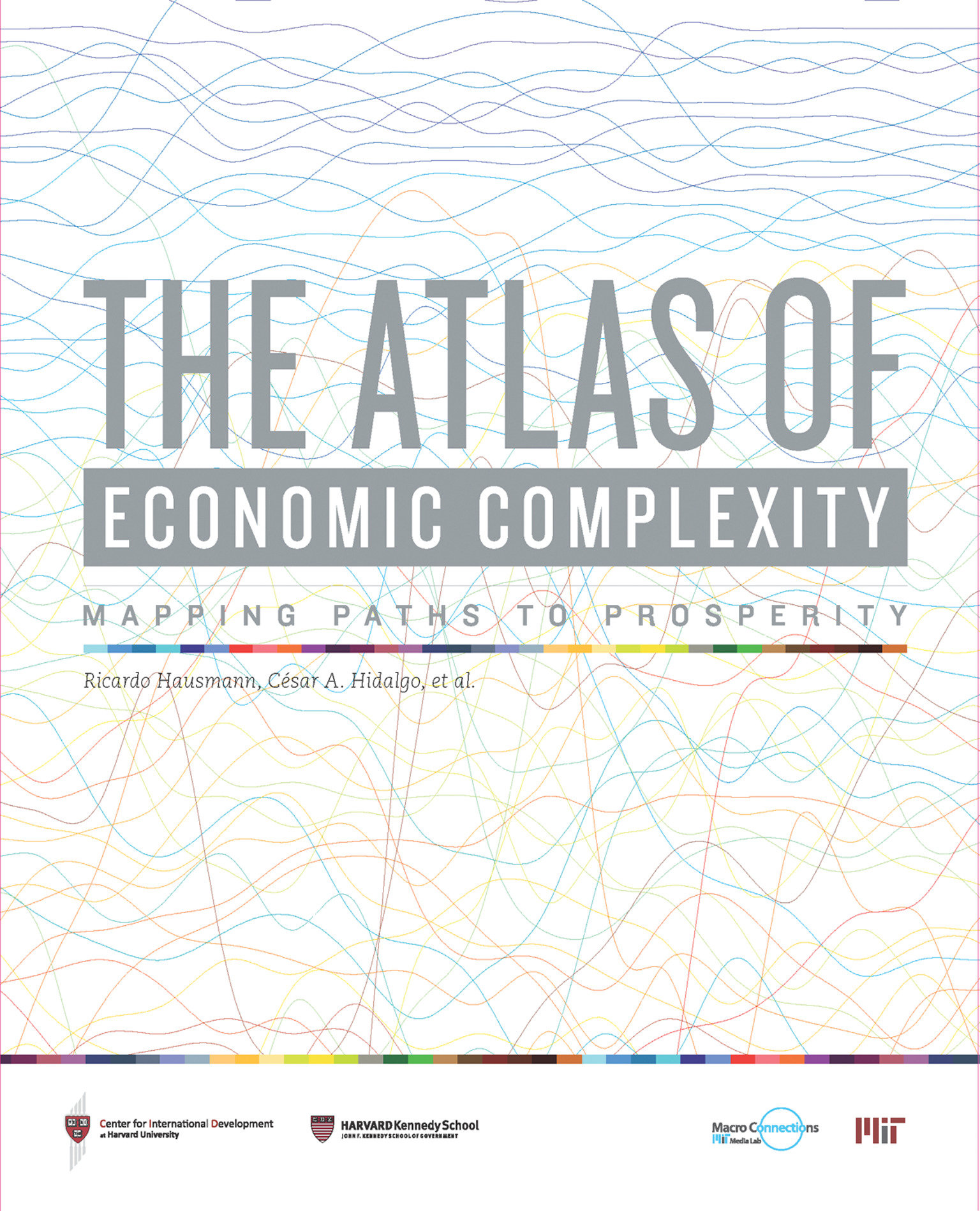
The Atlas of Economic Complexity
Mapping Paths to Prosperity
MIT Press · Print & ebook · January 17, 2014
Maps capture data expressing the economic complexity of countries from Albania to Zimbabwe, offering current economic measures and as well as a guide to achieving prosperity Why do some countries grow and others do not?
We earn from qualifying purchases.
- Who it’s for
- Maps and country pages trace productive knowledge, complexity rankings, and potential paths to economic diversification.
- Themes
- Economic complexity, Productive knowledge, Economic diversification and growth
- Genres
- Economic Development, Macroeconomics, International Economics
Nearest books
Matched by what the books are about, then ordered by what their readers also loved. Most of these share its genre: Economic Development.
 How Africa WorksJoe Studwell54% match
 Economic Growth and DevelopmentMatthew McCartney54% matchAlso shares Macroeconomics
 The Power of GeographyTim Marshall53% match
 The DivideJason Hickel, Jonathan Cowley50% match
For younger readers: The Kingfisher Atlas of the Modern World, Children's Picture Atlas, 1493 for Young People
Start with three books, and this one can be the first.
Members get a new edition every morning: a route out from their books to essays, research and talks, with the reason for each.
Start with this bookAbout this book
Maps capture data expressing the economic complexity of countries from Albania to Zimbabwe, offering current economic measures and as well as a guide to achieving prosperity Why do some countries grow and others do not? The authors of The Atlas of Economic Complexity offer readers an explanation based on "Economic Complexity," a measure of a society's productive knowledge.
Continue reading
Prosperous societies are those that have the knowledge to make a larger variety of more complex products. The Atlas of Economic Complexity attempts to measure the amount of productive knowledge countries hold and how they can move to accumulate more of it by making more complex products. Through the graphical representation of the "Product Space," the authors are able to identify each country's "adjacent possible," or potential new products, making it easier to find paths to economic diversification and growth. In addition, they argue that a country's economic complexity and its position in the product space are better predictors of economic growth than many other well-known development indicators, including measures of competitiveness, governance, finance, and schooling. Using innovative visualizations, the book locates each country in the product space, provides complexity and growth potential rankings for 128 countries, and offers individual country pages with detailed information about a country's current capabilities and its diversification options. The maps and visualizations included in the Atlas can be used to find more viable paths to greater productive knowledge and prosperity.
The Product Space
Maps and country pages trace productive knowledge, complexity rankings, and potential paths to economic diversification.
Come here for
- Maps placing countries in the Product Space
- Country pages detailing capabilities and diversification options
Expect
- Visualizations of 128 countries’ complexity and growth potential rankings
- A guide to each country’s current capabilities and diversification options
Where it sits
| Economic Development | 80% |
|---|---|
| Macroeconomics | 36% |
| International Economics | 25% |
Percentages are BookFrontier’s reading of the book.
Publisher categories
- Macroeconomics
- International Economics
- Library & Info Science
- Authors
- Ricardo Hausmann, Cesar A. Hidalgo, Sebastian Bustos
- Publisher
- MIT Press
- Published
- January 17, 2014
- Format
- Print & ebook
- Theme
- Economic complexity · Productive knowledge · Economic diversification and growth
- Reading lane
- Macroeconomics