
Linguistics and Philosophy
An Essay on the Philosophical Constants of Language
University of Notre Dame Press · Print & ebook · July 31, 2017
This marks the first time Linguistics and Philosophy, published in France in 1969, has been translated into English.
We earn from qualifying purchases.
- Who it’s for
- Gilson traces linguistic theories while probing how thought becomes language.
- Themes
- Thought and language, Concepts as mediators, Language change and decline
- Genres
- Philosophy of Language, Linguistics, Semantics
Nearest books
Matched by what the books are about, then ordered by what their readers also loved. Most of these share its genre: Philosophy of Language.
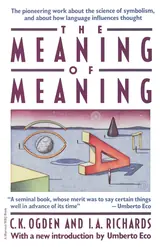 Meaning of MeaningC. K. Ogden, I. A. Richards63% matchAlso shares Semantics
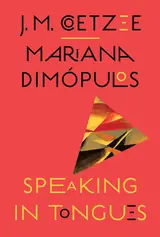 Speaking in TonguesJ. M. Coetzee, Mariana Dimópulos60% match
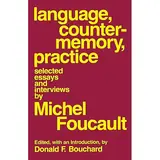 Language, Counter-memory, PracticeMichel Foucault, Donald F. Bouchard60% match
 The Archaeology of KnowledgeMichel Foucault60% match
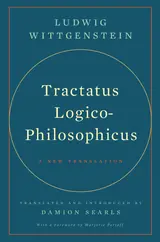 Tractatus Logico-philosophicusLudwig Wittgenstein59% matchAlso shares Semantics
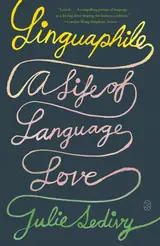 LinguaphileJulie Sedivy56% matchAlso shares Linguistics
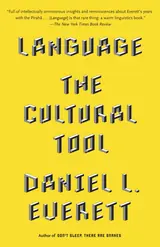 LanguageDaniel L. Everett56% match
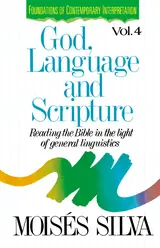 God, Language and ScriptureMoisés Silva54% match
For younger readers: Alphamaniacs
Start with three books, and this one can be the first.
Members get a new edition every morning: a route out from their books to essays, research and talks, with the reason for each.
Start with this bookAbout this book
This marks the first time Linguistics and Philosophy, published in France in 1969, has been translated into English. Here, philosopher Etienne Gilson examines linguistics?from Descartes to Derrida?as he argues for the irreducibility of thought to language. Reviewing the theories of figures such as Condillac, Mallarmé, de Saussure, and Vendryès, Gilson looks at the process whereby thought is translated into language, seeking to reestablish the notion of concepts as mediators.
Continue reading
The temptation of linguists to philosophize in such areas as the relationship of thought, language, and the world prompted Gilson to write Linguistics and Philosophy. In the introduction he does not claim to be a linguist, but rather a philosopher exercizing his option of selecting certain issues involving language that seem to be "philosophic constants." Decidedly philosophical in his approach, Gilson examines the way in which words, meanings, and languages grow continually and creatively, an inextricable part of life in society. He also explores our ability to construct abstract thoughts that point to an immaterial power of human beings, and he laments the degeneration of modern language brought about by radio and television broadcasters, especially in connection with neologistic and linguistic borrowing from other languages. We are currently observing the deterioration of language through the spoken word. In this fascinating work, Gilson demonstrates that the linguist cannot be indifferent to this occurrence.
Thought and Language
Gilson traces linguistic theories while probing how thought becomes language.
Come here for
- Theories from Condillac, Mallarmé, de Saussure, and Vendryès
- An examination of how thought is translated into language
Expect
- An argument for thought’s irreducibility to language
- An account of concepts as mediators
Where it sits
| Philosophy of Language | 97% |
|---|---|
| Linguistics | 58% |
| Semantics | 30% |
Percentages are BookFrontier’s reading of the book.
Publisher categories
- Pragmatics
- Social Philosophy
- Philosophy of Language
- Authors
- Etienne Gilson
- Publisher
- University of Notre Dame Press
- Published
- July 31, 2017
- Format
- Print & ebook
- Theme
- Thought and language · Concepts as mediators · Language change and decline
- Reading lane
- Pragmatics