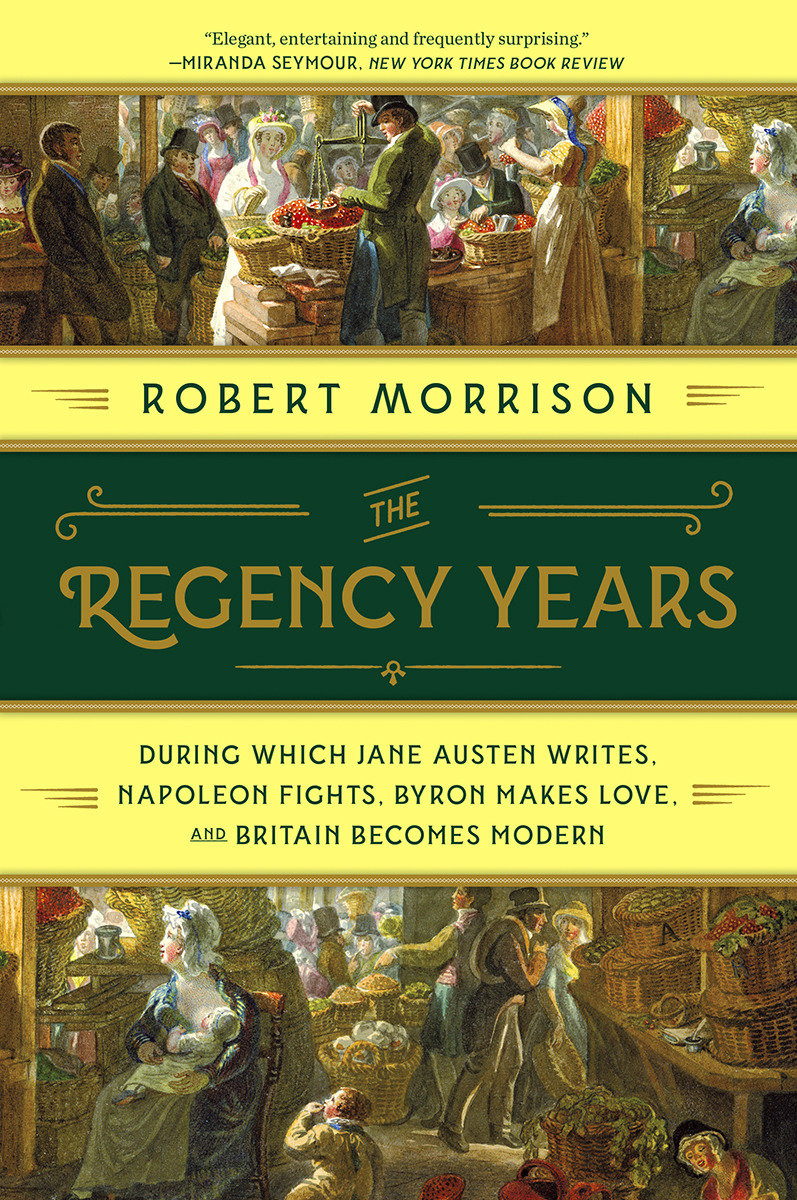
The Regency Years
During Which Jane Austen Writes, Napoleon Fights, Byron Makes Love, and Britain Becomes Modern
WW Norton · Print & ebook · July 7, 2020
A surprising and lively history of an overlooked era that brought the modern world of art, culture, and science decisively into view.
We earn from qualifying purchases.
- Who it’s for
- Explore the Regency as a decade of artistic brilliance, scientific change, and imperial ambition.
- Genres
- Georgian Britain (1714-1837), 19th-Century History, Napoleonic Wars
- Published
- WW Norton, July 7, 2020
Nearest books
Matched by what the books are about, then ordered by what their readers also loved.
 Jane Austen's EnglandRoy Adkins, Lesley Adkins69% matchShares Georgian Britain (1714-1837)
 Victorious CenturyDavid Cannadine, Kris Dyer70% matchShares 19th-Century History
 DominionPeter Ackroyd70% matchShares Georgian Britain (1714-1837) and 19th-Century History
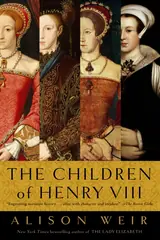 The Children of Henry VIIIAlison Weir53% match
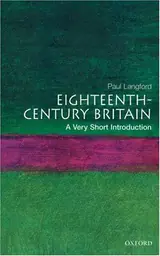 Eighteenth-century Britain: a Very Short IntroductionPaul Langford53% matchShares Georgian Britain (1714-1837)
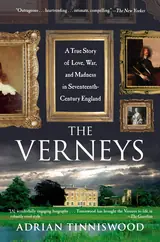 The VerneysAdrian Tinniswood54% match
For younger readers: Who Was Queen Victoria?, Victoria Rebels, Imperialism
Start with three books, and this one can be the first.
Members get a new edition every morning: a route out from their books to essays, research and talks, with the reason for each.
Start with this bookAbout this book
A surprising and lively history of an overlooked era that brought the modern world of art, culture, and science decisively into view. The Victorians are often credited with ushering in our current era, yet the seeds of change were planted in the years before. The Regency (1811–1820) began when the profligate Prince of Wales—the future king George IV—replaced his insane father, George III, as Britain’s ruler.
Continue reading
Around the regent surged a society steeped in contrasts: evangelicalism and hedonism, elegance and brutality, exuberance and despair. The arts flourished at this time with a showcase of extraordinary writers and painters such as Jane Austen, Lord Byron, the Shelleys, John Constable, and J. M. W. Turner. Science burgeoned during this decade, too, giving us the steam locomotive and the blueprint for the modern computer. Yet the dark side of the era was visible in poverty, slavery, pornography, opium, and the gothic imaginings that birthed the novel Frankenstein. With the British military in foreign lands, fighting the Napoleonic Wars in Europe and the War of 1812 in the United States, the desire for empire and an expanding colonial enterprise gained unstoppable momentum. Exploring these crosscurrents, Robert Morrison illuminates the profound ways this period shaped and indelibly marked the modern world.
A Decade in Tension
Explore the Regency as a decade of artistic brilliance, scientific change, and imperial ambition.
Come here for
- A lively portrait of Regency contrasts, from artistic flourishing to brutality
- The moment Austen, Byron, steam power, and early computing share the frame
Expect
- Cultural history with both elegance and troubling shadows
- Napoleonic conflict alongside the era’s restless social and scientific change
Where it sits
| Georgian Britain (1714-1837) | 98% |
|---|---|
| Napoleonic Wars | 72% |
| 19th-Century History | 61% |
Percentages are BookFrontier’s reading of the book.
Publisher categories
- Georgian Britain (1714-1837)
- Napoleonic Wars
- Authors
- Robert Morrison
- Publisher
- WW Norton
- Published
- July 7, 2020
- Format
- Print & ebook
- Reading lane
- Georgian Britain (1714-1837)