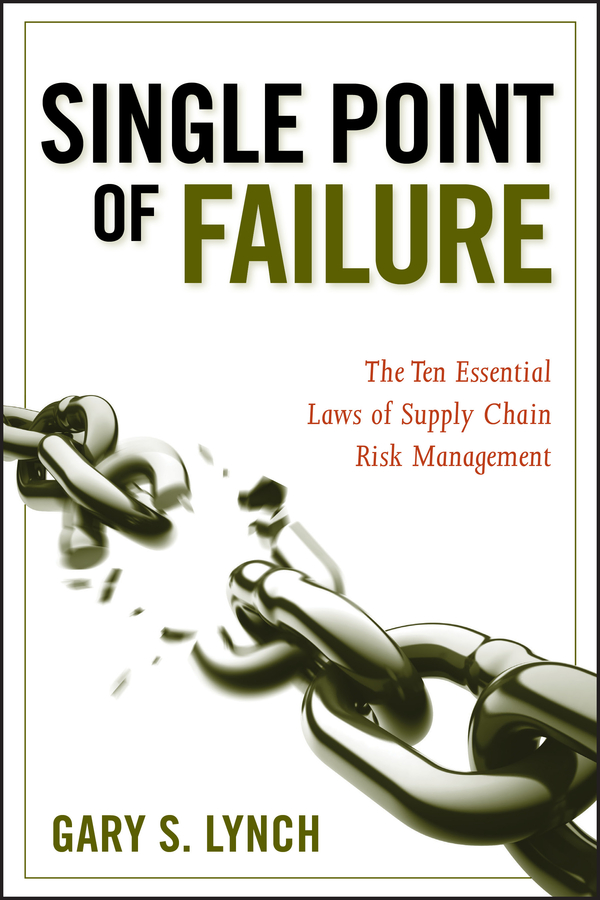
Single Point of Failure
The 10 Essential Laws of Supply Chain Risk Management
Wiley · Print & ebook · November 2, 2009
Over the past decade organizations have faced relentless customer demand for better value at less cost, individual customization, greater choice, faster delivery, higher quality, exceptional service, and more recently – increased environmental and social consciousness.
We earn from qualifying purchases.
- Who it’s for
- Case histories and analogies map supply-chain exposure and ways to address it.
- Themes
- Supply-chain risk management, Systemic risk and interdependence, Organizational resilience
- Genres
- Logistics & Supply Chains, Risk Assessment & Management, Operations Management
Nearest books
Matched by what the books are about, then ordered by what their readers also loved.
 Surviving and Thriving in UncertaintyFrederick Funston, Stephen Wagner63% matchShares Risk Assessment & Management
 Operational Risk Management in Financial ServicesElena Pykhova56% matchShares Risk Assessment & Management
 Governance, Risk Management, and ComplianceRichard M. Steinberg55% match
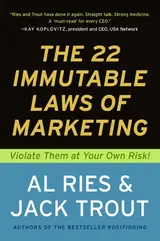 The 22 Immutable Laws of MarketingAl Ries, Jack Trout55% match
 Release It!Michael Nygard, Michael T. Nygard52% match
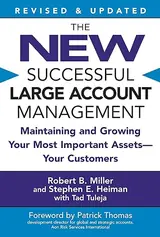 The New Successful Large Account ManagementRobert B. Miller, Stephen E. Heiman52% match
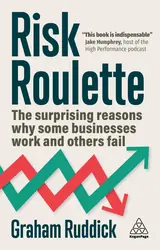 Risk RouletteGraham Ruddick52% matchShares Risk Assessment & Management
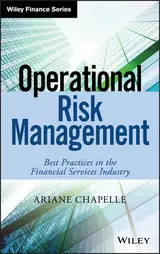 Operational Risk ManagementAriane Chapelle51% matchShares Risk Assessment & Management
Start with three books, and this one can be the first.
Members get a new edition every morning: a route out from their books to essays, research and talks, with the reason for each.
Start with this bookAbout this book
Over the past decade organizations have faced relentless customer demand for better value at less cost, individual customization, greater choice, faster delivery, higher quality, exceptional service, and more recently – increased environmental and social consciousness. The organization’s weapon of choice to address this increasing demand has been the supply chain.
Continue reading
However, as the supply chain footprint changed (e.g. outsourcing, off-shoring and customer/vendor empowerment) so did the organization’s exposure to uncertainty. Organizations were taken by surprise since this exposure was unanticipated, complex and beyond their ability to manage. As customers become more demanding and change occurs at an even greater pace, supply chain risk continues to propagate like a parasite. Organizations and societies are at much greater risk of systemic failure because of the massive interdependency throughout global supply chains. The priority now is two-fold; play catch-up and address these massive gaps while deploying more intelligent and integrated strategies (i.e. social aware, instinctive, dynamic and predictive) for dealing with continuous change. Single Point of Failure: The 10 Essential Laws of Supply Chain Risk Management uses analogies and dozens of case histories to describe the risk parasite that infects all supply chains while revealing methods to neutralize that parasite. The book addresses the questions: What are the "single points of failure"? How exposed are customers, investors, other stakeholders and ultimately the organization? What is the measurable impact (i.e. brand, financial, strategic, and non-compliance)? Who establishes the "risk paradigm"? How does the organization efficiently and effectively allocate precious resources - time, people, management attention, and capital? How is success measured? This book is both technically powerful and effectively realistic, based on today's complex global economy.
Supply Chain Fault Lines
Case histories and analogies map supply-chain exposure and ways to address it.
Come here for
- Analogies about supply-chain risk
- Dozens of case histories
Expect
- Questions about measurable impact
- Methods to neutralize supply-chain risk
Where it sits
| Logistics & Supply Chains | 93% |
|---|---|
| Operations Management | 43% |
| Risk Assessment & Management | 35% |
Percentages are BookFrontier’s reading of the book.
Publisher categories
- Managerial Accounting
- Authors
- Gary S. Lynch
- Publisher
- Wiley
- Published
- November 2, 2009
- Format
- Print & ebook
- Theme
- Supply-chain risk management · Systemic risk and interdependence · Organizational resilience
- Reading lane
- Managerial Accounting