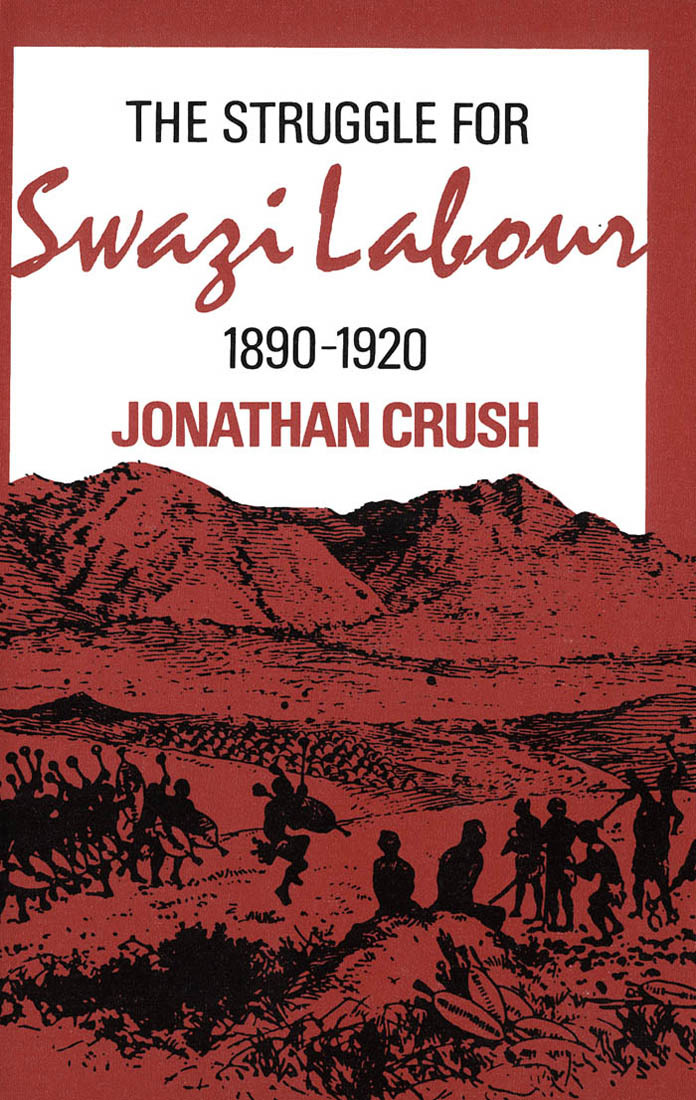
The Struggle for Swazi Labour, 1890-1920
McGill-Queen's University Press · Hardcover · November 1, 1987
Although the results of colonial expansion have been described in other general studies of the region, this is the first book to take a close look at the case of the Swazi in Swaziland.
We earn from qualifying purchases.
- Who it’s for
- Swazi labour migration takes shape through local institutions, land alienation, and competing employment markets.
- Genres
- Southern African History, Labor & Workforce, Colonialism & Its Aftermath
- Published
- McGill-Queen's University Press, November 1, 1987
Nearest books
Matched by what the books are about, then ordered by what their readers also loved.
 Slavery by Any Other NameEric Allina54% matchShares Colonialism & Its Aftermath
 Throwing Down White ManPeter Sanders, Peter B. Sanders54% matchShares Southern African History
 Diamonds, Gold, and WarMartin Meredith53% match
 The Zulus at WarAdrian Greaves, Xolani Mkhize53% match
 Blood River 1838Ian Knight53% match
 'this Matter of Women Is Getting Very Bad'Marc Epprecht52% matchShares Southern African History
 Total OnslaughtPaul Moorcraft51% matchShares Southern African History and Colonialism & Its Aftermath
For younger readers: Imperialism
Start with three books, and this one can be the first.
Members get a new edition every morning: a route out from their books to essays, research and talks, with the reason for each.
Start with this bookAbout this book
Although the results of colonial expansion have been described in other general studies of the region, this is the first book to take a close look at the case of the Swazi in Swaziland. Jonathan Crush shows that while the Swazi experienced many of the classic problems of underdevelopment, there were also a number of significant differences. For example, traditional relationships between chiefs and commoners showed much greater resilience than elsewhere.
Continue reading
This considerably affected the pace and nature of Swaziland's incorporation into South Africa's notorious migrant labour system. As well, because of the country's proximity to a number of alternative labour markets, the Swazi had a greater choice of employment than did many other groups in the region. Crush shows how the Swazi were able to use the system to their own advantage and how this helped shape the patterns of early Swazi migrancy. The Struggle for Swazi Labour examines the changing nature of the Swazi migrant labour force, the spatial patterns and temporal rhythms of migration, and the emergence of the Witwatersrand as the dominant, though by no means exclusive, employer of Swazi labour. It also shows how the local history of white settlement and land alienation influenced the manner in which the Swazi were subordinated to foreign economic and political control. The book fills an important gap in the history of Swaziland and in the economic history of the south African region as a whole. It will be helpful to anyone wishing to understand the pre-eminence of traditional personalities and institutions in contemporary Swaziland, and to those seeking an explanation for South African economic domination of the surrounding countries. Its comparative perspective makes it valuable to a wide range of scholars with interests in the social and economic development of southern Africa, as well as to labour and social historians, rural economists, and economic geographers.
Swazi Labour Migration
Swazi labour migration takes shape through local institutions, land alienation, and competing employment markets.
Come here for
- How chiefs and commoners shaped Swaziland’s incorporation into migrant labour
- Swazi employment choices and early migration patterns
Expect
- The changing migrant workforce and migration’s spatial patterns and rhythms
- The Witwatersrand’s rise as a major, but not exclusive, employer
Where it sits
| Southern African History | 55% |
|---|---|
| Colonialism & Its Aftermath | 33% |
| Labor & Workforce | 29% |
Percentages are BookFrontier’s reading of the book.
Publisher categories
- Labor & Workforce
- African History
- Authors
- Jonathan Crush
- Publisher
- McGill-Queen's University Press
- Published
- November 1, 1987
- Format
- Hardcover
- Reading lane
- Labor & Workforce