
Syntactical Mechanics
A New Approach to English, Latin, and Greek
University of Oklahoma Press · Print & ebook · October 22, 2014
Syntax, Bruce McMenomy would like the beleaguered student to know, is not a collection of inconsistent and arbitrary rules, but rather an organic expression of meaning that evolved over time.
We earn from qualifying purchases.
- Who it’s for
- English, Latin, and Greek syntax are examined together as structures that express meaning.
- Themes
- English, Latin, and Greek syntax, Grammar as an expression of meaning, Historical development of syntax
- Genres
- Syntax, Historical Linguistics, Ancient Languages Study
Nearest books
Matched by what the books are about, then ordered by what their readers also loved. Most of these share its genre: Ancient Languages Study.
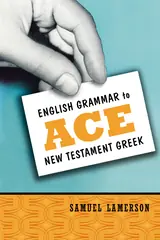 English Grammar to Ace New Testament GreekSamuel Lamerson68% match
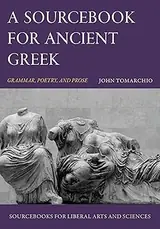 A Sourcebook for Ancient GreekJohn Tomarchio66% match
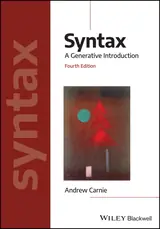 SyntaxAndrew Carnie66% matchAlso shares Syntax
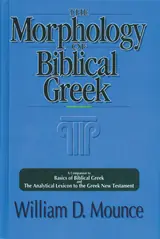 The Morphology of Biblical GreekWilliam D. Mounce63% match
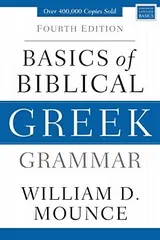 Basics of Biblical Greek GrammarWilliam D. Mounce61% match
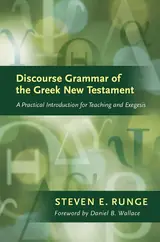 Discourse Grammar of the Greek New TestamentSteven E. Runge, Daniel B. Wallace61% match
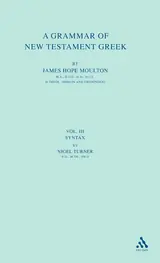 A Grammar of New Testament Greek, Vol 3James Hope Moulton61% match
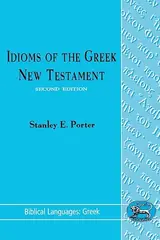 Idioms of the Greek New TestamentStanley E. Porter60% match
For younger readers: Grammar Girl Presents the Ultimate Writing Guide for Students, Scholastic Success With Grammar Grade 5 Workbook, Scholastic Success With Grammar Grade 2 Workbook
Start with three books, and this one can be the first.
Members get a new edition every morning: a route out from their books to essays, research and talks, with the reason for each.
Start with this bookAbout this book
Syntax, Bruce McMenomy would like the beleaguered student to know, is not a collection of inconsistent and arbitrary rules, but rather an organic expression of meaning that evolved over time. Aimed at intermediate and advanced students of classical languages, this book shows how understanding grammatical concepts as channels for meaning makes learning them that much easier and, in a word, natural.
Continue reading
Syntactical Mechanics systematically defines the basic categories of traditional grammar (parts of speech, subjects and predicates, and types of sentences and subordinate clauses), and then unpacks the most important syntactical structures and markings that shape meaning in a sentence. These grammatical entities evolved, McMenomy asserts, from their common Indo-European ancestors as tools for the expression of meaning, and the continuity of an idea can often be traced through these structures. Accordingly, he examines the elements of English, Latin, and Greek syntax together, exploring how their similarities and differences can disclose something of their underlying rationale. With abundant examples from English as well as Latin and Greek, McMenomy considers the grammatical cases of the noun, and the tenses, moods, and aspects of a verb. In an engaging and accessible manner, McMenomy helps to rationalize the apparent inconsistencies between Latin and Greek and makes the mastery of Latin and Greek constructions that much more meaningful, reasonable, and likely.
Three-Language Syntax
English, Latin, and Greek syntax are examined together as structures that express meaning.
Come here for
- Traditional grammar categories and sentence structures
- Noun cases, verb tenses, moods, and aspects
Expect
- Examples from all three languages
- Grammar categories, subordinate clauses, and syntactical markings
Where it sits
| Syntax | 88% |
|---|---|
| Historical Linguistics | 47% |
| Ancient Languages Study | 42% |
Percentages are BookFrontier’s reading of the book.
Publisher categories
- Syntax
- Authors
- Bruce A. McMenomy
- Publisher
- University of Oklahoma Press
- Published
- October 22, 2014
- Format
- Print & ebook
- Theme
- English, Latin, and Greek syntax · Grammar as an expression of meaning · Historical development of syntax
- Reading lane
- Syntax