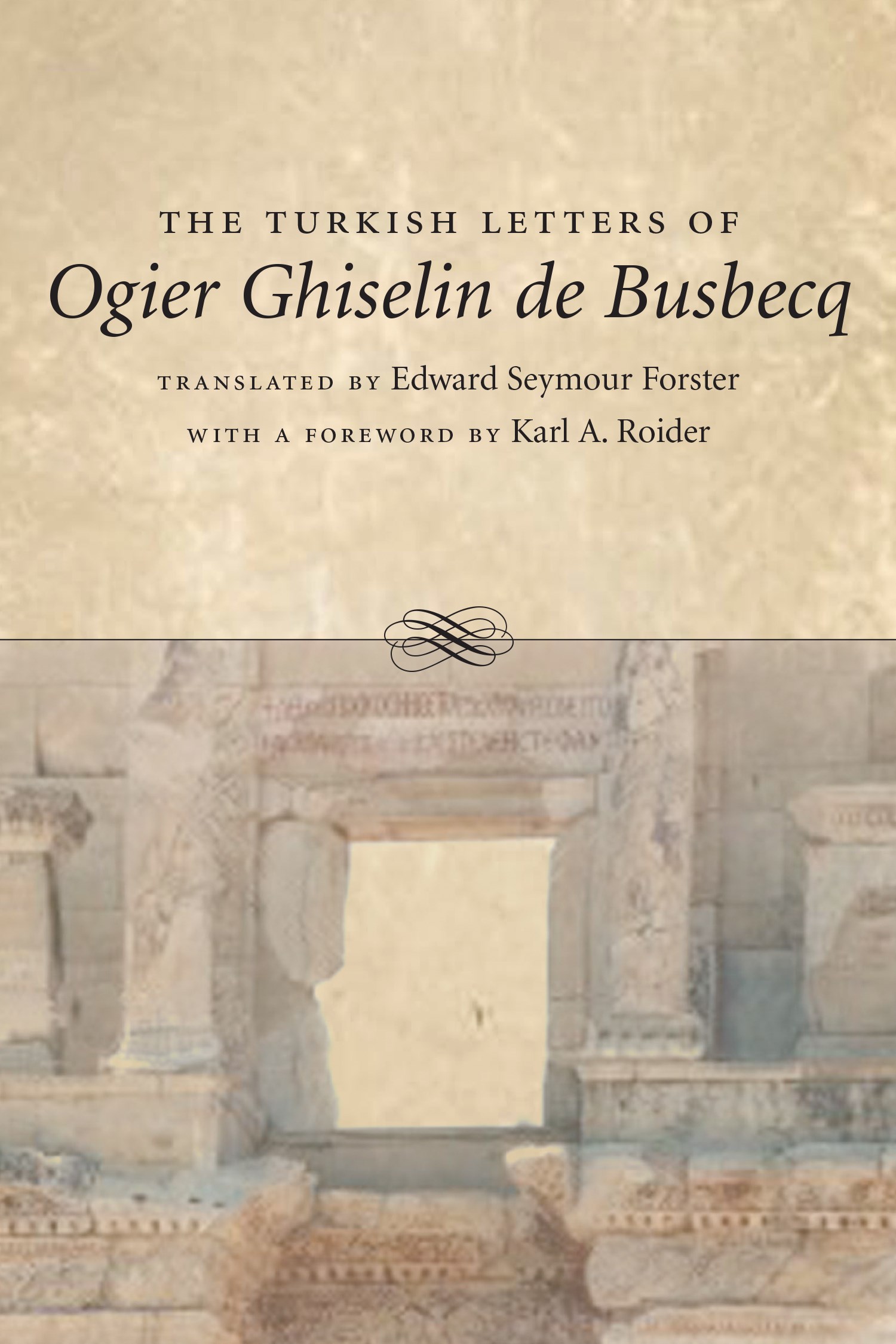
The Turkish Letters of Ogier Ghiselin De Busbecq
LSU Press · Paperback · June 1, 2005
A native of western Flanders, Ogier Ghiselin de Busbecq served in several posts as diplomatic representative for the Habsburg ruler Ferdinand I (King of Bohemia and Hungary, 1526?64, and Holy Roman Emperor, 1556?64).
We earn from qualifying purchases.
- Who it’s for
- Four letters make 16th-century Turkey vivid through an observant diplomat’s wide-ranging impressions.
- Themes
- Early travel literature, Ottoman society, Cultural understanding
- Genres
- Turkey & the Ottoman Era, Travel Writing, 16th-Century History
Nearest books
Matched by what the books are about, then ordered by what their readers also loved.
 The Secret HistoryProcopius42% match
 MontaigneStefan Zweig37% match
 Autobiography of Benvenuto CelliniBenvenuto Cellini36% match
 The History of the Medieval WorldSusan Wise Bauer38% match
 The Cheese and the WormsCarlo Ginzburg36% matchShares 16th-Century History
 The Man Who Stopped the SultanEdoardo Albert51% matchShares Turkey & the Ottoman Era and 16th-Century History
 Ottoman CenturiesLord Kinross48% matchShares Turkey & the Ottoman Era
 IstanbulJohn Freely44% matchShares Turkey & the Ottoman Era
For younger readers: Traveling Man, Imperialism, The Prince of Stars
Start with three books, and this one can be the first.
Members get a new edition every morning: a route out from their books to essays, research and talks, with the reason for each.
Start with this bookAbout this book
A native of western Flanders, Ogier Ghiselin de Busbecq served in several posts as diplomatic representative for the Habsburg ruler Ferdinand I (King of Bohemia and Hungary, 1526?64, and Holy Roman Emperor, 1556?64). Busbecq's most famous mission was undoubtedly to the Ottoman Empire at the zenith of its power and glory during the reign of Suleiman the Magnificent. In four letters to his friend Nicholas Michault?
Continue reading
who had been Busbecq's fellow student in Italy and afterwards was imperial ambassador to the Portuguese court?he details impressions on everything he saw and experienced in Turkey, including landscapes, plants, animals, Islam, ethnic groups, architecture, slavery, military matters, court practices, clothing, gender and domestic relations, and the Sultan himself. Suleiman (spelled Soleiman in the translation) the Magnificent is perhaps the most distinguished figure in Turkish history, and his reign saw the greatest extension of Turkish power. His devotion to his own religion and his tolerance of other faiths, his munificence and generosity, won him the fidelity of his subjects and the respect of his enemies. Busbecq was given the assignment of using diplomacy to check the raids of the Turks into Hungary, and he proved very effective with his quick sympathy, appreciation of the Turkish character, and untiring patience. He returned from Constantinople in the autumn of 1562 with an established reputation as a diplomatist. Busbecq's Turkish Letters is a treasure of early travel literature, reflecting Busbecq's rich literary talent, classical education, love for collecting antiquities, and remarkable power of observation. Delightfully entertaining reading, it also offers invaluable lessons on understanding and bridging cultural divides.
A Diplomat’s Eye
Four letters make 16th-century Turkey vivid through an observant diplomat’s wide-ranging impressions.
Come here for
- Early travel writing attentive to landscapes, customs, faith, and court life
- A historical view of cultural difference shaped by diplomacy
Expect
- A broad sweep of observations, from plants and architecture to the Sultan
- Entertaining prose with a classical scholar’s eye for detail
Where it sits
| Turkey & the Ottoman Era | 80% |
|---|---|
| 16th-Century History | 60% |
| Travel Writing | 43% |
Percentages are BookFrontier’s reading of the book.
Publisher categories
- Vision Care
- Western European History
- Travel Writing
- Authors
- Edward Seymour Forster
- Publisher
- LSU Press
- Published
- June 1, 2005
- Format
- Paperback
- Theme
- Early travel literature · Ottoman society · Cultural understanding
- Reading lane
- Vision Care