
The Origins of the Cuban Revolution Reconsidered
The University of North Carolina Press · Paperback · March 13, 2006
Analyzing the crucial period of the Cuban Revolution from 1959 to 1961, Samuel Farber challenges dominant scholarly and popular views of the revolution’s sources, shape, and historical trajectory.
We earn from qualifying purchases.
- Who it’s for
- A close account of how Cuba’s 1959–1961 rebellion became a social revolution.
- Genres
- Cuban History, Revolutionary History, Cold War History
- Published
- The University of North Carolina Press, March 13, 2006
Nearest books
Matched by what the books are about, then ordered by what their readers also loved. Most of these share its genres: Cuban History, Revolutionary History and Cold War History.
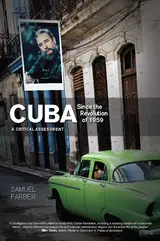 Cuba Since the Revolution of 1959Samuel Farber73% match
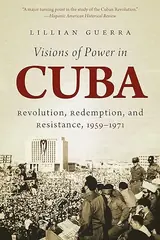 Visions of Power in CubaLillian Guerra73% match
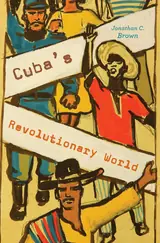 Cuba's Revolutionary WorldJonathan C. Brown75% match
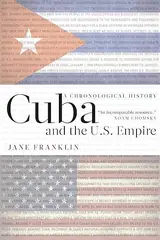 Cuba and the U.s. EmpireJane Franklin, Noam Chomsky73% match
 Cuban Revolution ReaderJulio García Luis, Julio Garcia Luis72% match
 Fulgencio BatistaFrank Argote-Freyre72% match
 Cuba Libre!Tony Perrottet71% match
 Antiracism in CubaDevyn Spence Benson70% match
For younger readers: Leaving Glorytown, Coming Up Cuban, The Art of White Roses
Start with three books, and this one can be the first.
Members get a new edition every morning: a route out from their books to essays, research and talks, with the reason for each.
Start with this bookAbout this book
Analyzing the crucial period of the Cuban Revolution from 1959 to 1961, Samuel Farber challenges dominant scholarly and popular views of the revolution’s sources, shape, and historical trajectory.
Continue reading
Unlike many observers, who treat Cuba’s revolutionary leaders as having merely reacted to U.S. policies or domestic socioeconomic conditions, Farber shows that revolutionary leaders, while acting under serious constraints, were nevertheless autonomous agents pursuing their own independent ideological visions, although not necessarily according to a master plan. Exploring how historical conflicts between U.S. and Cuban interests colored the reactions of both nations' leaders after the overthrow of Fulgencio Batista, Farber argues that the structure of Cuba’s economy and politics in the first half of the twentieth century made the island ripe for radical social and economic change, and the ascendant Soviet Union was on hand to provide early assistance. Taking advantage of recently declassified U.S. and Soviet documents as well as biographical and narrative literature from Cuba, Farber focuses on three key years to explain how the Cuban rebellion rapidly evolved from a multiclass, antidictatorial movement into a full-fledged social revolution.
Cuba’s First Revolutionary Years
A close account of how Cuba’s 1959–1961 rebellion became a social revolution.
Come here for
- Leader autonomy amid U.S.–Cuban conflicts
- Early Soviet assistance and changing revolutionary aims
Expect
- Three years traced through political and economic change
- Conflicts shaping both nations’ leaders after Batista’s overthrow
Where it sits
| Cuban History | 95% |
|---|---|
| Revolutionary History | 68% |
| Cold War History | 49% |
Percentages are BookFrontier’s reading of the book.
Publisher categories
- Cuban History
- Communism & Socialism
- Authors
- Samuel Farber
- Publisher
- The University of North Carolina Press
- Published
- March 13, 2006
- Format
- Paperback
- Reading lane
- Cuban History