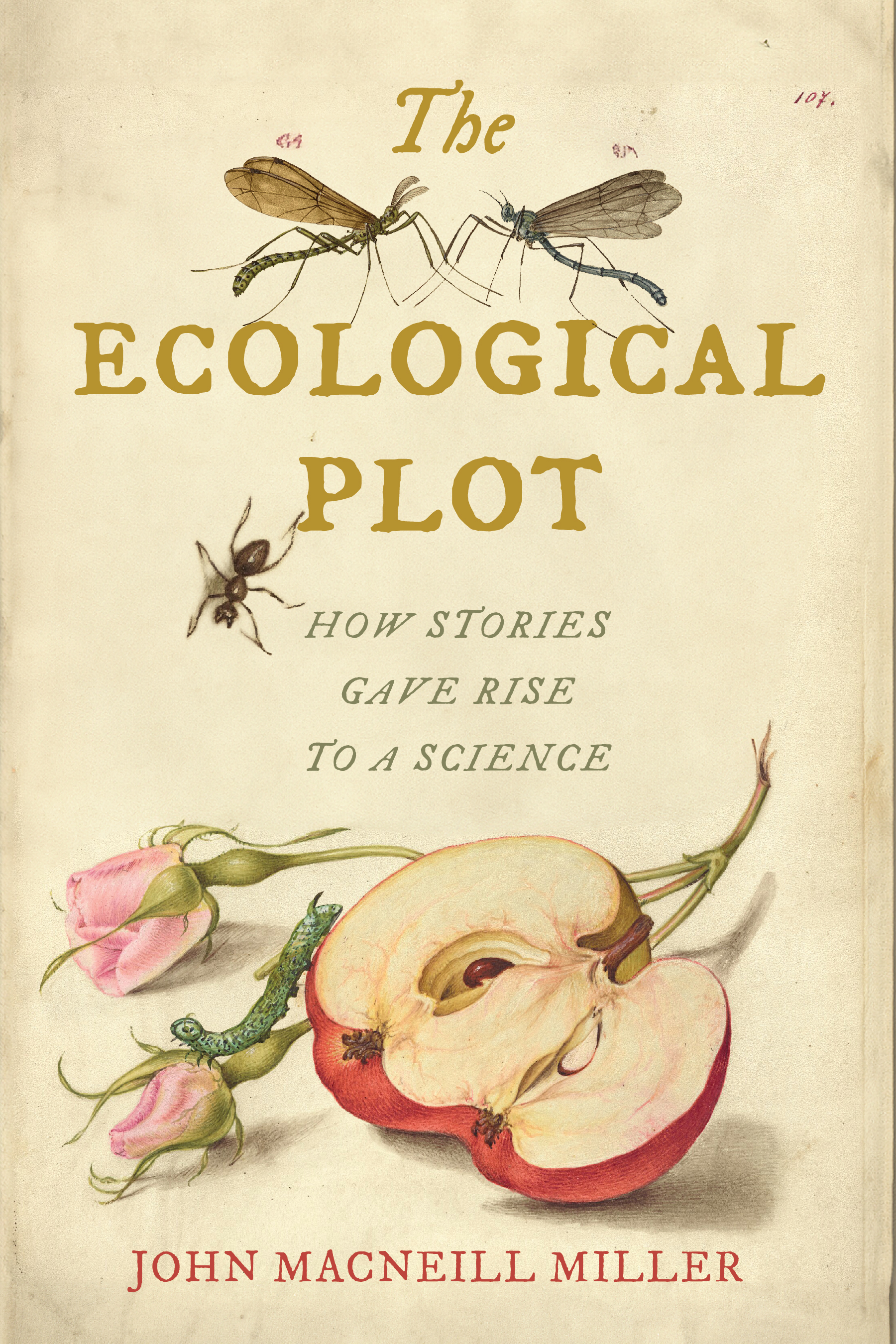
The Ecological Plot
How Stories Gave Rise to a Science
University of Virginia Press · Print & ebook · September 24, 2024
Unraveling the surprising history of the concept of ecology The Ecological Plot traces the roots of this most mainstream branch of science back to an unexpected source: narrative storytelling.
We earn from qualifying purchases.
- Who it’s for
- John MacNeill Miller traces how literary storytelling helped shape ecology, economics, and realist fiction.
- Genres
- Ecology, 19th-Century Literary Criticism, Environmental Economics
- Published
- University of Virginia Press, September 24, 2024
Nearest books
Matched by what the books are about, then ordered by what their readers also loved.
 The Storytelling AnimalJonathan Gottschall60% match
 Encounters With the ArchdruidJohn McPhee, Betty Crumley57% match
 Postcolonial EcologiesElizabeth DeLoughrey, George B. Handley57% match
 Storytelling and the Sciences of MindDavid Herman56% match
 The Storyworld AccordErin James56% match
 Premodern Ecologies in the Modern Literary ImaginationVin Nardizzi, Tiffany Jo Werth56% match
 Victorian EcocriticismDewey W. Hall, Julie M. Barst55% matchShares 19th-Century Literary Criticism
For younger readers: The Wondrous Workings of Planet Earth, Discovering Life’s Story: the Evolution of an Idea, Eyes Wide Open: Going Behind the Environmental Headlines
Start with three books, and this one can be the first.
Members get a new edition every morning: a route out from their books to essays, research and talks, with the reason for each.
Start with this bookAbout this book
Unraveling the surprising history of the concept of ecology The Ecological Plot traces the roots of this most mainstream branch of science back to an unexpected source: narrative storytelling.
Continue reading
Weaving together the histories of different disciplines, John MacNeill Miller shows how pioneering thinkers drew on a shared set of literary techniques to imagine how different species could work together as a single, interdependent community, redefining the way we conceptualize the natural world. Beginning with a series of revolutionary exchanges between the political economist Thomas Robert Malthus, the writer Harriet Martineau, and the naturalist Charles Darwin, The Ecological Plot identifies the foundations of modern notions of ecology, economics, and realist fiction, maps how they evolved through the works of Victorian writers such as Elizabeth Gaskell, George Eliot, and Thomas Hardy, and shows how they resurfaced in the works of Aldo Leopold and Rachel Carson a century later. Miller’s book reveals why our most sophisticated efforts to explain humanity’s relationship to nature have been segregated into different disciplines and makes an argument for the importance of bringing these separate ways of understanding the world back together as a crucial step toward solving the environmental, economic, and ethical problems of the present.
Storytelling and Ecology
John MacNeill Miller traces how literary storytelling helped shape ecology, economics, and realist fiction.
Come here for
- The exchanges among Malthus, Martineau, and Darwin
- Ecology’s links to Victorian fiction and later environmental writing
Expect
- Connections across Malthus, Martineau, Darwin, Gaskell, Eliot, and Hardy
- A case for bringing nature, economic, and ethical thinking together
Where it sits
| Ecology | 55% |
|---|---|
| 19th-Century Literary Criticism | 30% |
| Environmental Economics | 29% |
Percentages are BookFrontier’s reading of the book.
Publisher categories
- 19th-Century Literary Criticism
- Nature in Literature
- Ecology
- History of Science
- Authors
- John MacNeill Miller
- Publisher
- University of Virginia Press
- Published
- September 24, 2024
- Format
- Print & ebook
- Reading lane
- 19th-Century Literary Criticism