
Words, Not Swords
Iranian Women Writers and the Freedom of Movement
Syracuse University Press · Print & ebook · May 16, 2011
A woman not only needs a room of her own, as Virginia Woolf wrote, but also the freedom to leave it and return to it at will; for a room without that right becomes a prison cell.
We earn from qualifying purchases.
- Who it’s for
- Farzaneh Milani examines how movement, sex segregation, and women’s writing intersect in Iranian literature and film.
- Genres
- Feminist Theory & Criticism, Middle Eastern Lit Crit, Women's Studies
- Published
- Syracuse University Press, May 16, 2011
Nearest books
Matched by what the books are about, then ordered by what their readers also loved.
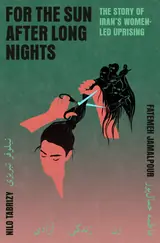 For the Sun After Long NightsFatemeh Jamalpour, Nilo Tabrizy66% matchShares Women's Studies
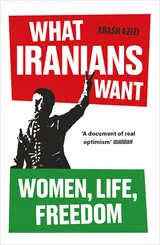 What Iranians WantArash Azizi66% match
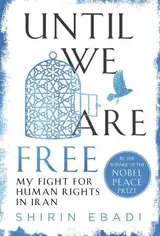 Until We Are FreeShirin Ebadi, Shohreh Aghdashloo57% match
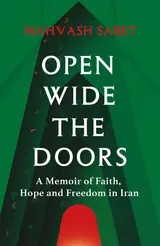 Open Wide the DoorsMahvash Sabet57% match
 Young and Defiant in TehranShahram Khosravi56% match
 The Pearl of DariZuzanna Olszewska56% match
 The Caged VirginAyaan Hirsi Ali56% matchShares Feminist Theory & Criticism and Women's Studies
For younger readers: If You Could Be Mine, Blue Thread, A Thousand Nights
Start with three books, and this one can be the first.
Members get a new edition every morning: a route out from their books to essays, research and talks, with the reason for each.
Start with this bookAbout this book
A woman not only needs a room of her own, as Virginia Woolf wrote, but also the freedom to leave it and return to it at will; for a room without that right becomes a prison cell. The privilege of self-directed movement, the power to pick up and go as one pleases, has not been a traditional "right" of Iranian women. This prerogative has been denied them in the name of piety, anatomy, chastity, class, safety, and even beauty.
Continue reading
It is only during the last 160 years that the spell has been broken and Iranian women have emerged as a moderating, modernizing force. Women writers have been at the forefront of this desegregating movement and renegotiation of boundaries. Words, Not Swords explores the legacy of sex segregation and its manifestations in Iranian literature and film and in notions of beauty and the erotics of passivity. Milani expands her argument beyond Iranian culture, arguing that freedom of movement is a theme that crosses frontiers and dissolves conventional distinctions of geography, history, and religion. She makes bold connections between veiling and foot binding, between Cinderella and Barbie, between the figures of the female Gypsy and the witch. In so doing, she challenges cultural hierarchies that divert attention from key issues in the control of women across the globe.
Freedom of Movement
Farzaneh Milani examines how movement, sex segregation, and women’s writing intersect in Iranian literature and film.
Come here for
- Iranian women writers and the history of freedom of movement
- Connections between veiling, foot binding, Cinderella, and Barbie
Expect
- Discussion of beauty and the erotics of passivity
- An argument extending freedom of movement across cultures
Where it sits
| Women's Studies | 30% |
|---|---|
| Feminist Theory & Criticism | 29% |
| Middle Eastern Lit Crit | 24% |
Percentages are BookFrontier’s reading of the book.
Publisher categories
- Middle Eastern Lit Crit
- Women Authors Criticism
- Authors
- Farzaneh Milani
- Publisher
- Syracuse University Press
- Published
- May 16, 2011
- Format
- Print & ebook
- Reading lane
- Middle Eastern Lit Crit