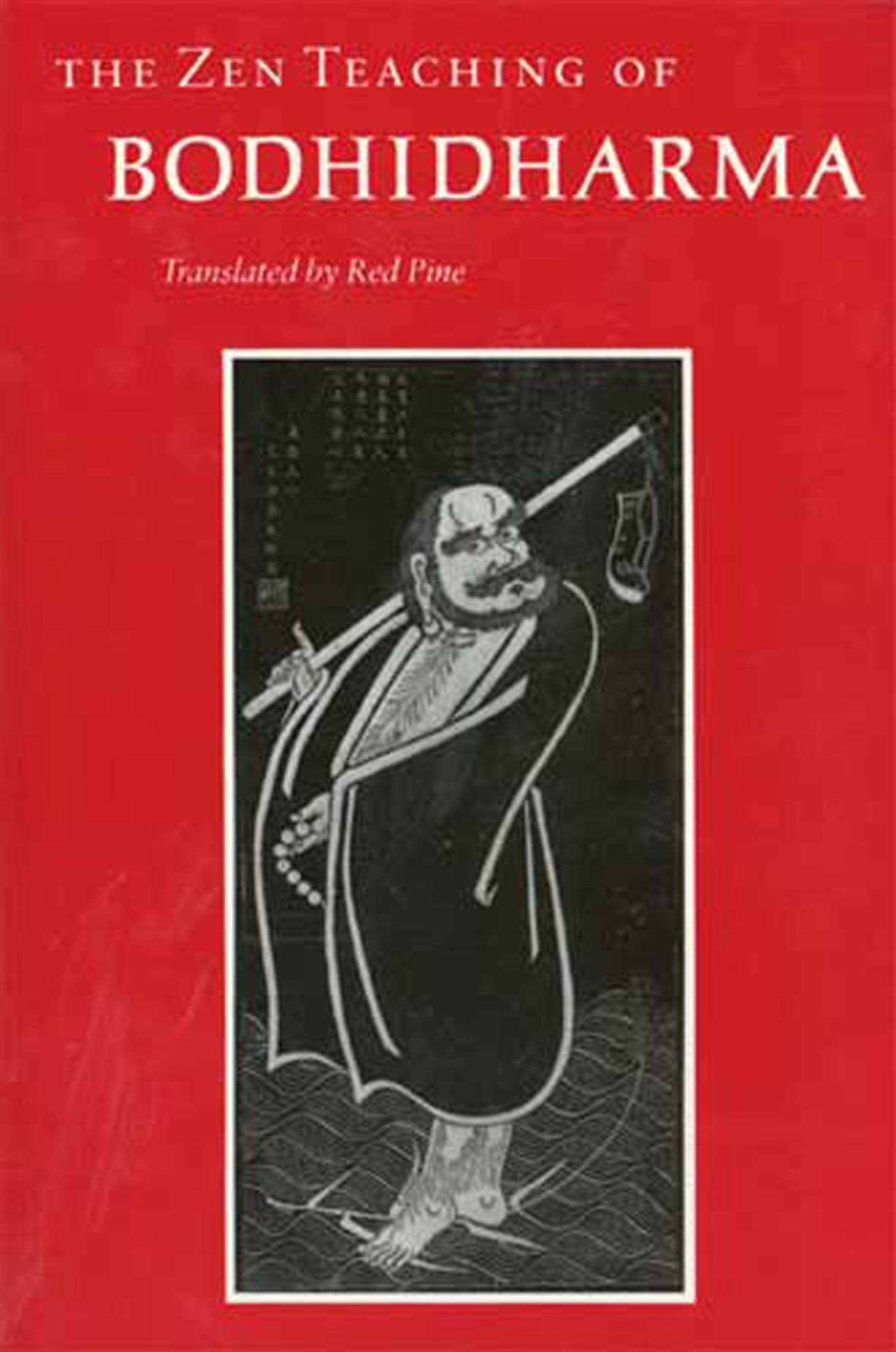
The Zen Teaching of Bodhidharma
Farrar Straus & Giroux · Paperback · November 1, 1989
A fifth-century Indian Buddhist monk, Bodhidharma is credited with bringing Zen to China.
We earn from qualifying purchases.
- Who it’s for
- Quiet, practice-minded writing with enough edge to reward slow rereading.
- Genres
- Zen Buddhism, Zen, Buddhist Sacred Writings
- Published
- Farrar Straus & Giroux, November 1, 1989
Nearest books
Matched by what the books are about, then ordered by what their readers also loved. Most of these share its genre: Zen Buddhism.
 The Diamond SutraRed Pine, Anonymous67% matchAlso shares Buddhist Sacred Writings
 The Platform SutraRed Pine, Hui-Neng68% matchAlso shares Zen and Buddhist Sacred Writings
 Not Always SoShunryu Suzuki, Edward Espe Brown52% matchAlso shares Zen
 Shambhala: the Sacred Path of the WarriorChogyam Trungpa, Carolyn Rose Gimian56% match
 MindfulnessJoseph Goldstein52% match
 Silent IlluminationGuo Gu61% match
 The Lankavatara SutraRed Pine71% matchAlso shares Zen and Buddhist Sacred Writings
 Self-liberation Through Seeing With Naked AwarenessPadmasambhava, Karma Lingpa62% matchAlso shares Buddhist Sacred Writings
For younger readers: Wide Awake
Start with three books, and this one can be the first.
Members get a new edition every morning: a route out from their books to essays, research and talks, with the reason for each.
Start with this bookAbout this book
A fifth-century Indian Buddhist monk, Bodhidharma is credited with bringing Zen to China. Although the tradition that traces its ancestry back to him did not flourish until nearly two hundred years after his death, today millions of Zen Buddhists and students of kung fu claim him as their spiritual father.
Continue reading
While others viewed Zen practice as a purification of the mind or a stage on the way to perfect enlightenment, Bodhidharma equated Zen with buddhahood and believed that it had a place in everyday life. Instead of telling his disciples to purify their minds, he pointed them to rock walls, to the movements of tigers and cranes, to a hollow reed floating across the Yangtze. This bilingual edition, the only volume of the great teacher's work currently available in English, presents four teachings in their entirety. "Outline of Practice" describes the four all-inclusive habits that lead to enlightenment, the "Bloodstream Sermon" exhorts students to seek the Buddha by seeing their own nature, the "Wake-up Sermon" defends his premise that the most essential method for reaching enlightenment is beholding the mind. The original Chinese text, presented on facing pages, is taken from a Ch'ing dynasty woodblock edition.
Quiet Practice
Quiet, practice-minded writing with enough edge to reward slow rereading.
Come here for
- Zen teachings in a spare, meditative register
- A book to dip into, not race through
Expect
- Sacred text with historical weight
- Reflection over narrative
Where it sits
| Zen Buddhism | 97% |
|---|---|
| Zen | 34% |
| Buddhist Sacred Writings | 28% |
Percentages are BookFrontier’s reading of the book.
Publisher categories
- Zen
- Buddhist Thought
- Buddhism - General
- Authors
- Bodhidharma, Red Pine
- Publisher
- Farrar Straus & Giroux
- Published
- November 1, 1989
- Format
- Paperback
- Reading lane
- Zen