
The Cybernetics Moment
Or Why We Call Our Age the Information Age
Johns Hopkins University Press · Print & ebook · October 16, 2017
How did cybernetics and information theory arise, and how did they come to dominate fields as diverse as engineering, biology, and the social sciences?
We earn from qualifying purchases.
- Who it’s for
- Trace how cybernetics and information theory reshaped scientific language and ideas about intelligent machines.
- Themes
- History of cybernetics, Information theory, Humans and intelligent machines
- Genres
- Cybernetics, History of Computing, Information Theory
Nearest books
Matched by what the books are about, then ordered by what their readers also loved.
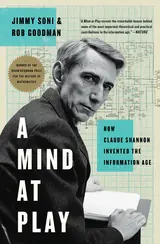 A Mind at PlayJimmy Soni, Rob Goodman63% matchShares History of Computing and Information Theory
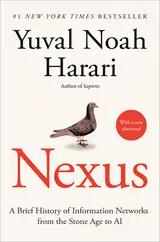 NexusYuval Noah Harari63% match
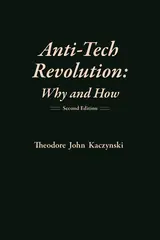 Anti-tech RevolutionTheodore John Kaczynski57% match
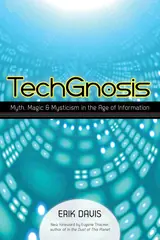 TechgnosisErik Davis, Steve Wojtas56% match
 The ShallowsNicholas Carr56% match
 The Idea MachineJoel J. Miller56% match
For younger readers: Future Tense, Big Lies, The Way Things Work: Newly Revised Edition
Start with three books, and this one can be the first.
Members get a new edition every morning: a route out from their books to essays, research and talks, with the reason for each.
Start with this bookAbout this book
How did cybernetics and information theory arise, and how did they come to dominate fields as diverse as engineering, biology, and the social sciences? Winner of the CHOICE Outstanding Academic Title of the Choice ACRL Outstanding Academic Title, Choice Cybernetics—the science of communication and control as it applies to machines and to humans—originates from efforts during World War II to build automatic antiaircraft systems.
Continue reading
Following the war, this science extended beyond military needs to examine all systems that rely on information and feedback, from the level of the cell to that of society. In The Cybernetics Moment, Ronald R. Kline, a senior historian of technology, examines the intellectual and cultural history of cybernetics and information theory, whose language of "information," "feedback," and "control" transformed the idiom of the sciences, hastened the development of information technologies, and laid the conceptual foundation for what we now call the Information Age. Kline argues that, for about twenty years after 1950, the growth of cybernetics and information theory and ever-more-powerful computers produced a utopian information narrative—an enthusiasm for information science that influenced natural scientists, social scientists, engineers, humanists, policymakers, public intellectuals, and journalists, all of whom struggled to come to grips with new relationships between humans and intelligent machines. Kline traces the relationship between the invention of computers and communication systems and the rise, decline, and transformation of cybernetics by analyzing the lives and work of such notables as Norbert Wiener, Claude Shannon, Warren McCulloch, Margaret Mead, Gregory Bateson, and Herbert Simon. Ultimately, he reveals the crucial role played by the cybernetics moment—when cybernetics and information theory were seen as universal sciences—in setting the stage for our current preoccupation with information technologies.
Information and Feedback
Trace how cybernetics and information theory reshaped scientific language and ideas about intelligent machines.
Come here for
- The field’s roots in wartime antiaircraft systems
- The work of Norbert Wiener, Claude Shannon, and Margaret Mead
Expect
- A history of cybernetics and information theory
- Their rise, decline, and transformation after 1950
Where it sits
| Information Theory | 42% |
|---|---|
| Cybernetics | 34% |
| History of Computing | 32% |
Percentages are BookFrontier’s reading of the book.
Publisher categories
- Cybernetics
- 20th-Century America
- History of Science
- History of Technology
- Authors
- Ronald R. Kline
- Publisher
- Johns Hopkins University Press
- Published
- October 16, 2017
- Format
- Print & ebook
- Theme
- History of cybernetics · Information theory · Humans and intelligent machines
- Reading lane
- Cybernetics