
Data Science at the Command Line
Obtain, Scrub, Explore, and Model Data With Unix Power Tools
O'Reilly Media · Print & ebook · September 21, 2021
This thoroughly revised guide demonstrates how the flexibility of the command line can help you become a more efficient and productive data scientist.
We earn from qualifying purchases.
- Who it’s for
- Use Unix command-line tools to obtain, scrub, explore, and model data in a science workflow.
- Themes
- Command-line data science, Data cleaning and exploration, Statistical modeling
- Genres
- Data Science, Data Mining, Machine Learning
Nearest books
Matched by what the books are about, then ordered by what their readers also loved.
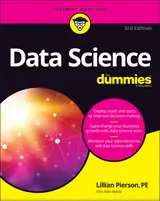 Data Science for DummiesLillian Pierson51% matchShares Data Science, Data Mining and Machine Learning
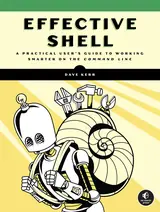 Effective ShellDave Kerr66% match
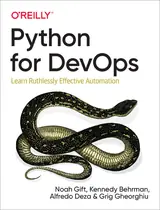 Python for DevopsNoah Gift, Kennedy Behrman65% match
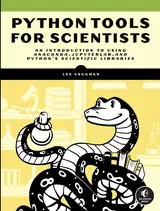 Python Tools for ScientistsLee Vaughan65% matchShares Data Science
 Introducing Data ScienceDavy Cielen, Arno Meysman60% matchShares Data Science and Machine Learning
 Software Engineering for Data ScientistsCatherine Nelson60% matchShares Data Science
 The Linux Command Line, 3rd EditionWilliam Shotts59% match
 Learning SparkJules Damji, Brooke Wenig59% matchShares Data Mining and Machine Learning
For younger readers: The CS Detective
Start with three books, and this one can be the first.
Members get a new edition every morning: a route out from their books to essays, research and talks, with the reason for each.
Start with this bookAbout this book
This thoroughly revised guide demonstrates how the flexibility of the command line can help you become a more efficient and productive data scientist. You'll learn how to combine small yet powerful command-line tools to quickly obtain, scrub, explore, and model your data. To get you started, author Jeroen Janssens provides a Docker image packed with over 100 Unix power tools--useful whether you work with Windows, macOS, or Linux.
Continue reading
You'll quickly discover why the command line is an agile, scalable, and extensible technology. Even if you're comfortable processing data with Python or R, you'll learn how to greatly improve your data science workflow by leveraging the command line's power. This book is ideal for data scientists, analysts, engineers, system administrators, and researchers. - Obtain data from websites, APIs, databases, and spreadsheets - Perform scrub operations on text, CSV, HTML, XML, and JSON files - Explore data, compute descriptive statistics, and create visualizations - Manage your data science workflow - Create your own tools from one-liners and existing Python or R code - Parallelize and distribute data-intensive pipelines - Model data with dimensionality reduction, regression, and classification algorithms - Leverage the command line from Python, Jupyter, R, RStudio, and Apache Spark
Unix Data Tools
Use Unix command-line tools to obtain, scrub, explore, and model data in a science workflow.
Come here for
- Obtaining data from websites, APIs, databases, and spreadsheets
- Creating tools from one-liners and existing Python or R code
Expect
- Scrubbing text, CSV, HTML, XML, and JSON files
- Dimensionality reduction, regression, and classification algorithms
Where it sits
| Data Science | 55% |
|---|---|
| Machine Learning | 35% |
| Data Mining | 26% |
Percentages are BookFrontier’s reading of the book.
Publisher categories
- Data Science
- Database Administration
- Linux Systems
- Math & Stats Software
Show all 5 publisher categories
- Machine Learning
- Authors
- Jeroen Janssens
- Publisher
- O'Reilly Media
- Published
- September 21, 2021
- Format
- Print & ebook
- Theme
- Command-line data science · Data cleaning and exploration · Statistical modeling
- Reading lane
- Data Science