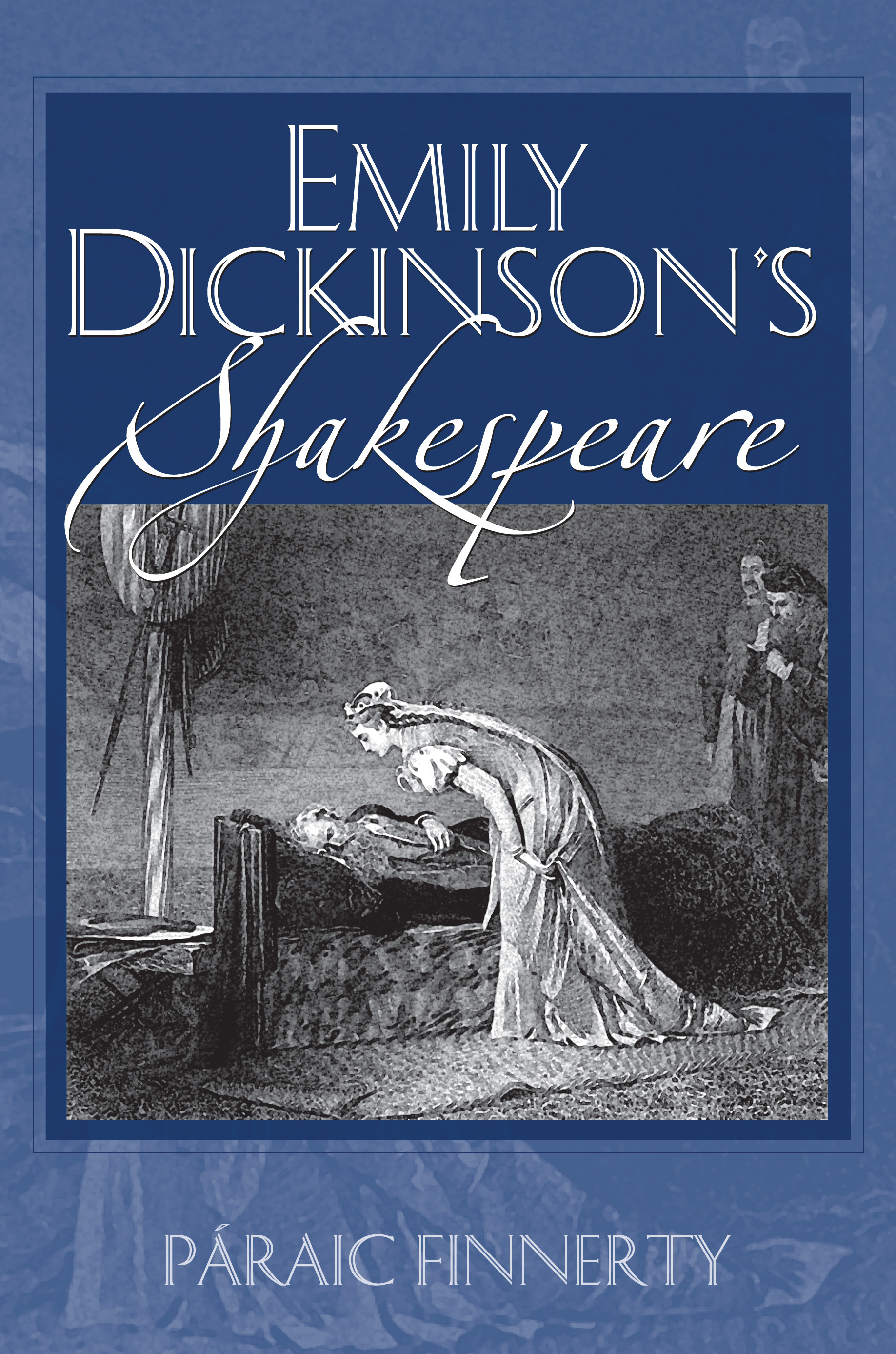
Emily Dickinson's Shakespeare
University of Massachusetts Press · Print & ebook · September 23, 2008
A discovery pick for readers interested in Emily Dickinson's Shakespeare.
We earn from qualifying purchases.
- Who it’s for
- Dickinson’s Shakespeare takes shape through her letters and nineteenth-century American reading culture.
- Themes
- Dickinson and Shakespeare, Reading shaped by culture, Gender and cultural expectations
- Genres
- Shakespeare Studies, Women Authors Criticism, 19th-Century Literary Criticism
Nearest books
Matched by what the books are about, then ordered by what their readers also loved. Most of these share its genre: Shakespeare Studies.
 How Shakespeare Changed EverythingStephen Marche62% match
 Shakespeare's Greatest LoveDavid Medina62% match
 Dark RenaissanceStephen Greenblatt55% match
For younger readers: Ophelia, An Assassin's Guide to Love and Treason, Bard of Avon: the Story of William Shakespeare
Start with three books, and this one can be the first.
Members get a new edition every morning: a route out from their books to essays, research and talks, with the reason for each.
Start with this bookAbout this book
One of the messages that Emily Dickinson wanted to communicate to the world was her great love of William Shakespeare?her letters abound with references to him and his works. This book explores the many implications of her admiration for the Bard.
Continue reading
Páraic Finnerty clarifies the essential role that Shakespeare had in Dickinson's life by locating her allusions to his writings within a nineteenth-century American context and by treating reading as a practice that is shaped, to a large extent, by culture. In the process, he throws new light on Shakespeare's multifaceted presence in Dickinson's world: in education, theater, newspapers, public lectures, reading clubs, and literary periodicals. Through analysis of letters, journals, diaries, records, periodicals, newspapers, and marginalia, Finnerty juxtaposes Dickinson's engagement with Shakespeare with the responses of her contemporaries. Her Shakespeare emerges as an immoral dramatist and highly moral poet; a highbrow symbol of class and cultivation and a lowbrow popular entertainer; an impetus behind the emerging American theater criticism and an English author threatening American creativity; a writer culturally approved for women and yet one whose authority women often appropriated to critique their culture. Such a context allows the explication of Dickinson's specific references to Shakespeare and further conjecture about how she most likely read him. Finnerty also examines those of Dickinson's responses to Shakespeare that deviated from what might have been expected and approved of by her culture. Imaginatively departing from the commonplace, Dickinson chose to admire three of Shakespeare's most powerful and transgressive female characters?Cleopatra, Queen Margaret, and Lady Macbeth?instead of his more worthy and virtuous heroines. More startling, although the poet found resonance for her own life in Hamlet, Romeo and Juliet, and Macbeth, she chose, in the racially charged atmosphere of nineteenth-century America, to identify with Shakespeare's most controversial character, Othello, thereby defying expectations once again.
Dickinson’s Shakespeare
Dickinson’s Shakespeare takes shape through her letters and nineteenth-century American reading culture.
Come here for
- Dickinson’s Shakespeare references in nineteenth-century American culture
Expect
- Attention to her admiration for Cleopatra, Queen Margaret, and Lady Macbeth
- Discussion of her identification with Othello
Where it sits
| Shakespeare Studies | 86% |
|---|---|
| 19th-Century Literary Criticism | 46% |
| Women Authors Criticism | 44% |
Percentages are BookFrontier’s reading of the book.
Publisher categories
- Writers' Lives
- American Lit Crit
- Poetry Criticism
- Shakespeare Studies
Show all 5 publisher categories
- Literature & History
- Authors
- Paraic Finnerty
- Publisher
- University of Massachusetts Press
- Published
- September 23, 2008
- Format
- Print & ebook
- Theme
- Dickinson and Shakespeare · Reading shaped by culture · Gender and cultural expectations
- Reading lane
- Writers' Lives