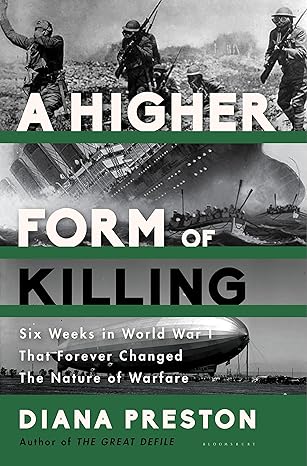
A Higher Form of Killing
Six Weeks in World War I That Forever Changed the Nature of Warfare
Bloomsbury · Print & ebook · February 24, 2015
Between April 22 and May 30, 1915, Western civilization was shocked.
We earn from qualifying purchases.
- Who it’s for
- A concise, serious look at a brief moment that reshaped how war is understood.
- Genres
- World War I History, Chemical & Biological Warfare, Weapons Through History
- Published
- Bloomsbury, February 24, 2015
Nearest books
Matched by what the books are about, then ordered by what their readers also loved. Most of these share its genre: World War I History.
 The Fall of the OttomansEugene Rogan55% match
 The Killing SeasonRobert Cowley71% match
 Dead WakeErik Larson62% match
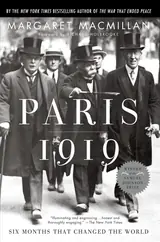 Paris 1919Margaret MacMillan, Richard Holbrooke67% match
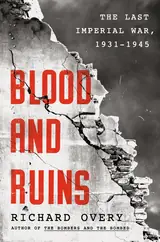 Blood and RuinsRichard Overy55% match
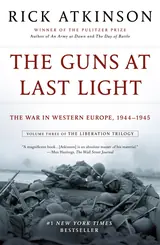 The Guns at Last LightRick Atkinson, Tim Duggan56% match
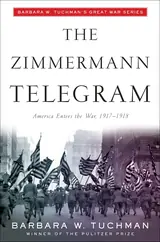 The Zimmermann TelegramBarbara W. Tuchman67% match
 LusitaniaGreg King, Penny Wilson62% match
For younger readers: What Was World War I?, World War One: 1914-1918, World War Two: Under the Shadow of the Swastika
Start with three books, and this one can be the first.
Members get a new edition every morning: a route out from their books to essays, research and talks, with the reason for each.
Start with this bookAbout this book
Between April 22 and May 30, 1915, Western civilization was shocked. World War I was already appalling in its brutality, but it had until then been fought on the battlefield and by rules long agreed by convention. Suddenly those rules were abandoned when Germany forever altered the way war would be fought.
Continue reading
On April 22, at Ypres, German canisters spewed poison gas at French and Canadian soldiers in their trenches; on May 7, the German submarine, U-20, without warning, torpedoed the passenger linerLusitania, killing 1,198 civilians; and on May 31, a German zeppelin began the first aerial bombardment of London and its inhabitants. Each of these actions violated rules of war carefully agreed to at the Hague Conventions of 1898 and 1907 and were deliberately breached by Germany in an attempt to spread terror and force the Allies to surrender. While that failed, the psychological damage caused by these attacks far outweighed the casualties. The era of weapons of mass destruction had dawned. While each of these momentous events has been chronicled in histories of the war, celebrated historian Diana Preston links them for the first time, revealing the dramatic stories and the personalities behind them through the eyes of those who were there--whether making the decisions to use the weapons or experiencing their horrifying effect in the trenches, on board theLusitaniaor on the streets of London. Placing the attacks in the context of the centuries-old debate over what constitutes "just war," Preston shows how, in their aftermath, the other combatants felt the necessity to develop extreme weapons of their own. In our current time of terror, when weapons of mass destruction are once again implemented and threatened and wartime atrocities abound in a very different kind of conflict, the vivid story of their birth is of great relevance.
War Changed Shape
A concise, serious look at a brief moment that reshaped how war is understood.
Come here for
- warfare’s hard pivot point
- clear, high-level historical framing
Expect
- cultural context without fuss
- sustained, explanatory history
Where it sits
| Chemical & Biological Warfare | 83% |
|---|---|
| World War I History | 57% |
| Weapons Through History | 31% |
Percentages are BookFrontier’s reading of the book.
Publisher categories
- History
- Authors
- Diana Preston
- Publisher
- Bloomsbury
- Published
- February 24, 2015
- Format
- Print & ebook
- Reading lane
- History