
How Computers Make Books
From Graphics Rendering, Search Algorithms, and Functional Programming to Indexing and Typesetting
Manning · Print & ebook · June 6, 2024
Learn about computer science by exploring the fascinating journey it took to make this book!
We earn from qualifying purchases.
- Who it’s for
- Explore basic computer science through the digital processes that turn words and images into printed books.
- Themes
- Computer science fundamentals, Digital book publishing, Programming and automation
- Genres
- Computer Science
Nearest books
Matched by what the books are about, then ordered by what their readers also loved.
 Tiny C ProjectsDan Gookin53% match
 CodeCharles Petzold62% matchShares Computer Science
 People's History of Computing in the United StatesJoy Lisi Rankin58% match
 Inside the MachineJon Stokes58% match
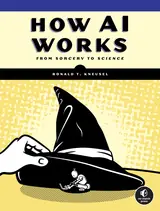 How AI WorksRonald T. Kneusel55% match
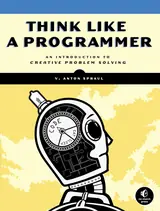 Think Like a ProgrammerV. Anton Spraul55% match
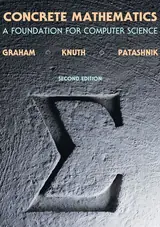 Concrete MathematicsRonald L. Graham, Donald E. Knuth55% matchShares Computer Science
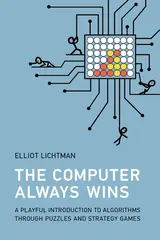 The Computer Always WinsElliot Lichtman55% matchShares Computer Science
For younger readers: Science Comics: Computers, The CS Detective, Basher Science Mini: Artificial Intelligence
Start with three books, and this one can be the first.
Members get a new edition every morning: a route out from their books to essays, research and talks, with the reason for each.
Start with this bookAbout this book
Learn about computer science by exploring the fascinating journey it took to make this book! How Computers Make Books introduces what’s wonderful about computer science by showing how computers have transformed the art of publishing books. Author and publishing software developer John Whitington reveals the elegant computer science solutions invented to solve big publishing challenges.
Continue reading
In How Computers Make Books you’ll discover: - How human descriptions are translated into computer programs - How a computer can understand document formatting - How a program decides where to print ink on a page - Why computer science is so interesting to computer scientists, and why it might interest you - …and much more! How do computers represent all the different languages and letters used by humans? How do we compress a book’s worth of complex information so it can be transferred in seconds? And what exactly is a computer program? This book answers all those questions by telling the story of how it was created! About the technology Computers are part of every step in creating a book, from capturing the author’s words as a digital document to controlling how the ink gets onto the paper. How Computers Make Books introduces basic computer science concepts like file formatting, transfer, and storage, computer programming, and task automation by guiding you through the modern digital printing process. About the book This book takes you on a journey from the plain white page, weaving through typesetting, making gray images from black ink, electronic file formats, and more. It makes computer science come alive as you see how every word, illustration, and page has its own story. You’ll even learn to write your own simple programs and discover hands-on what’s so intoxicating about computer science. What's inside - How human descriptions are translated into computer programs - How a digital computer thinks about print documents - How a program decides where to print ink on a page - How the history of typesetting shows up in modern books About the reader For the curious-but-clueless about computer science—and anyone interested in how computers make books! About the author John Whitington is the founder of a company that builds software for electronic document processing. He has studied and taught Computer Science at Queens’ College, Cambridge. Technical editor on this book was Bojan Stojanovic. Table of Contents 1 Putting marks on paper 2 Letter forms 3 Storing words 4 Looking and finding 5 Typing it in 6 Saving space 7 The sums behind the screen 8 Gray areas 9 A typeface 10 Words to paragraphs 11 Out into the world
From Words to Print
Explore basic computer science through the digital processes that turn words and images into printed books.
Come here for
- How computers handle words, document formatting, and ink placement
- A path through typesetting, file formats, storage, and printing
Expect
- Explanations of computer programming, file formats, transfer, and storage
- A chance to write simple programs and explore typesetting
Where it sits
| Computer Science | 66% |
|---|
Percentages are BookFrontier’s reading of the book.
Publisher categories
- Image Processing
- Computer Science
- Computer Graphics & Media Design
- Authors
- John Whitington
- Publisher
- Manning
- Published
- June 6, 2024
- Format
- Print & ebook
- Theme
- Computer science fundamentals · Digital book publishing · Programming and automation
- Reading lane
- Image Processing