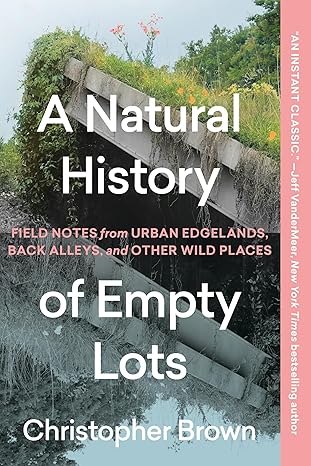
A Natural History of Empty Lots
Field Notes From Urban Edgelands, Back Alleys, and Other Wild Places
Timber Press · Print & ebook · September 17, 2024
An "instant classic", this genre-bending blend of naturalism, memoir, and social manifesto is a fascinating study for rewilding the city, the self, and society (Jeff VanderMeer, New York Times bestselling author).
We earn from qualifying purchases.
- Who it’s for
- Field notes that make overlooked places feel legible, strange, and quietly alive.
- Genres
- Nature Writing, Personal Memoirs, Ecology
- Published
- Timber Press, September 17, 2024
Nearest books
Matched by what the books are about, then ordered by what their readers also loved.
 True NatureLance Richardson51% match
 When the Forest BreathesSuzanne Simard53% match
 American SmokeIain Sinclair51% match
 Cheap Land ColoradoTed Conover, Random House Audio61% match
 Sea of GrassDave Hage, Josephine Marcotty58% match
For younger readers: The Monarchs of Winghaven, Harlem Grown, A Good Place
Start with three books, and this one can be the first.
Members get a new edition every morning: a route out from their books to essays, research and talks, with the reason for each.
Start with this bookAbout this book
An "instant classic", this genre-bending blend of naturalism, memoir, and social manifesto is a fascinating study for rewilding the city, the self, and society (Jeff VanderMeer, New York Times bestselling author). During the real estate crash of the late 2000s, Christopher Brown purchased an empty lot in an industrial section of Austin, Texas. The property—abandoned and full of litter and debris—was an unlikely site for a home.
Continue reading
Brown had become fascinated with these empty lots around Austin, so-called “ruined” spaces once used for agriculture and industry awaiting their redevelopment. He discovered them to be teeming with natural activity, and embarked on a twenty-year project to live in and document such spaces. There, in our most damaged landscapes, he witnessed the remarkable resilience of wild nature, and how we can heal ourselves by healing the Earth. Beautifully written and philosophically hard-hitting, A Natural History of Empty Lots offers a new lens on human disruption and nature, offering a sense of hope among the edgelands. “Brown lives far from any conventional battlefield, but he is surrounded by the wreckage of a different war, and he, too, finds hope in cultivating the ruins of nature… A Natural History of Empty Lots is less a departure from the nature writing tradition than a welcome addition to its edgelands.” — New York Review of Books "The nature writing we need now." —Michelle Nijhuis, author of Beloved Beasts "Incredible" —Kelly Link, Pulitzer Prize finalist Read more
Hidden Terrain
Field notes that make overlooked places feel legible, strange, and quietly alive.
Come here for
- urban edgelands and back alleys
- nature/ development crosscurrents
Expect
- observant, essayistic prose
- a city-leaning natural history
Where it sits
| Ecology | 39% |
|---|---|
| Nature Writing | 30% |
| Personal Memoirs | 21% |
Percentages are BookFrontier’s reading of the book.
Publisher categories
- Urban & Land Use Planning
- Personal Memoirs
- Authors
- Christopher Brown
- Publisher
- Timber Press
- Published
- September 17, 2024
- Format
- Print & ebook
- Reading lane
- Urban & Land Use Planning