
The Antinomies of Realism
Verso Books · Print & ebook · March 10, 2015
A Philosophy pick for readers exploring The Antinomies of Realism.
We earn from qualifying purchases.
- Genres
- 19th-Century Literary Criticism, Literary Theory, British & Irish Literary Criticism
- Published
- Verso Books, March 10, 2015
Nearest books
Matched by what the books are about, then ordered by what their readers also loved.
 Allegory and IdeologyFredric Jameson58% matchShares Literary Theory
 Raymond ChandlerFredric Jameson49% match
 Everything and LessMark McGurl53% match
 Secular ScriptureNorthrop Frye50% matchShares Literary Theory
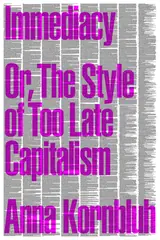 ImmediacyAnna Kornbluh50% match
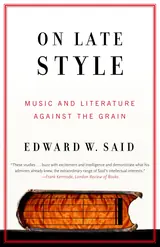 On Late StyleEdward W. Said47% match
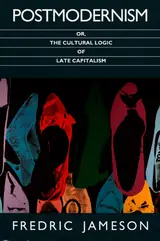 Postmodernism, Or, the Cultural Logic of Late CapitalismFredric Jameson54% matchShares Literary Theory
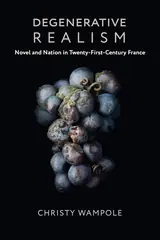 Degenerative RealismChristy Wampole64% match
Start with three books, and this one can be the first.
Members get a new edition every morning: a route out from their books to essays, research and talks, with the reason for each.
Start with this bookAbout this book
The Antinomies of Realism is a history ofthe nineteenth-century realist novel and its legacy told without a glimmer of nostalgia for artistic achievements that the movement of history makes it impossible to recreate. The works of Zola, Tolstoy, Pérez Galdós, and George Eliot are in the most profound sense inimitable, yet continue to dominate the novel form to this day.
Continue reading
Novels to emerge since struggle to reconcile the social conditions of their own creation with the history of this mode of writing: the so-called modernist novel is one attempted solution to this conflict, as is the ever-more impoverished variety of commercial narratives – what today’s book reviewers dub “serious novels,” which are an attempt at the impossible endeavor to roll back the past. Fredric Jameson examines the most influential theories of artistic and literary realism, approaching the subject himself in terms of the social and historical preconditions for realism’s emergence. The realist novel combined an attention to the body and its states of feeling with a focus on the quest for individual realization within the confines of history. In contemporary writing, other forms of representation – for which the term “postmodern” is too glib – have become visible: for example, in the historical fiction of Hilary Mantel or the stylistic plurality of David Mitchell’s novels. Contemporary fiction is shown to be conducting startling experiments in the representation of new realities of a global social totality, modern technological warfare, and historical developments that, although they saturate every corner of our lives, only become apparent on rare occasions and by way of the strangest formal and artistic devices. In a coda, Jameson explains how “realistic” narratives survived the end of classical realism. In effect, he provides an argument for the serious study of popular fiction and mass culture that transcends lazy journalism and the easy platitudes of recent cultural studies.
Critical Aftershocks
Come here for
- Philosophical literary criticism
- Essays with political edge
Expect
- Dense critical prose
- More argument than narrative
Where it sits
| 19th-Century Literary Criticism | 47% |
|---|---|
| Literary Theory | 31% |
| British & Irish Literary Criticism | 22% |
Percentages are BookFrontier’s reading of the book.
Publisher categories
- Literary Theory
- Comparative Literature
- 19th-Century Literary Criticism
- Authors
- Fredric Jameson
- Publisher
- Verso Books
- Published
- March 10, 2015
- Format
- Print & ebook
- Reading lane
- Literary Theory