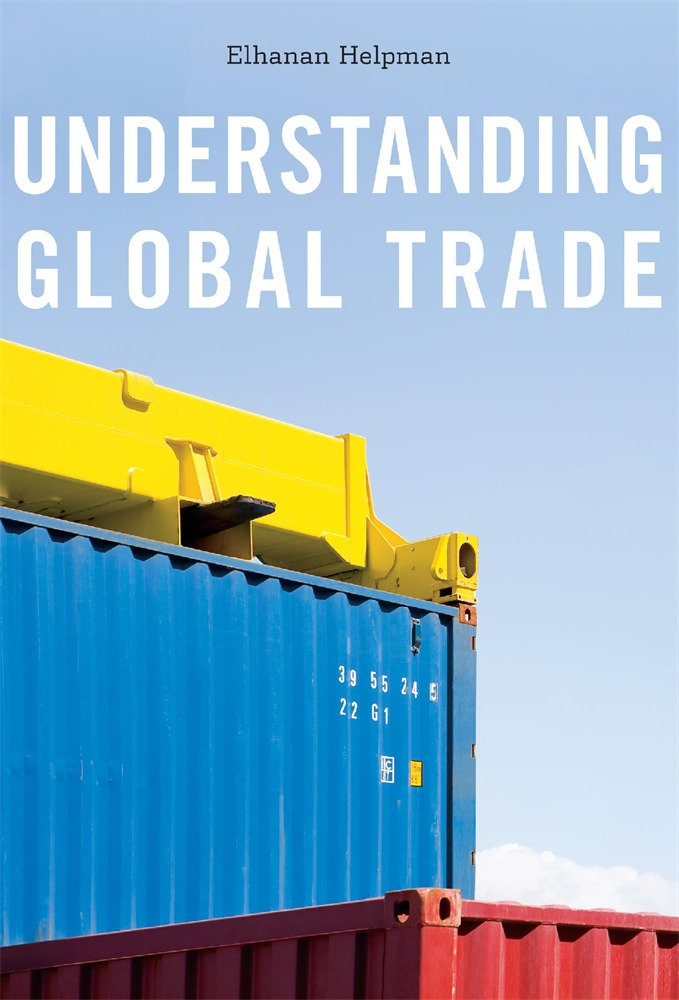
Understanding Global Trade
Hardcover – Illustrated, April 25, 2011
WW Norton · Hardcover · April 26, 2011
Global trade is of vital interest to citizens as well as policymakers, yet it is widely misunderstood.
We earn from qualifying purchases.
- Who it’s for
- A compact account of comparative advantage, income distribution, and firms reshaping international production.
- Genres
- International Economics, Globalization, Trade & Tariffs
- Published
- WW Norton, April 26, 2011
Nearest books
Matched by what the books are about, then ordered by what their readers also loved.
 Red CapitalismCarl Walter, Fraser Howie50% matchShares International Economics
 Exorbitant PrivilegeBarry Eichengreen52% matchShares International Economics
 The Little Book of EconomicsGreg Ip60% match
 Who Gets What — and WhyAlvin E. Roth54% match
 How Economics Explains the WorldAndrew Leigh59% match
 The New China PlaybookKeyu Jin50% matchShares International Economics
 The Worldly PhilosophersRobert L. Heilbroner57% match
 The Wisdom of FinanceMihir Desai50% match
For younger readers: The Kingfisher Atlas of the Modern World, Imperialism
Start with three books, and this one can be the first.
Members get a new edition every morning: a route out from their books to essays, research and talks, with the reason for each.
Start with this bookAbout this book
Global trade is of vital interest to citizens as well as policymakers, yet it is widely misunderstood. This compact exposition of the market forces underlying international commerce addresses both of these concerned groups, as well as the needs of students and scholars. Although it contains no equations, it is almost mathematical in its elegance, precision, and power of expression.
Continue reading
Understanding Global Trade provides a thorough explanation of what shapes the international organization of production and distribution and the resulting trade flows. It reviews the evolution of knowledge in this field from Adam Smith to today as a process of theoretical modeling, accumulation of new empirical data, and then revision of analytical frameworks in response to evidence and changing circumstances. It explains the sources of comparative advantage and how they lead countries to specialize in making products which they then sell to other countries. While foreign trade contributes to the overall welfare of a nation, it also creates winners and losers, and Helpman describes mechanisms through which trade affects a country's income distribution. The book provides a clear and original account of the revolutions in trade theory of the 1980s and the most recent decade. It shows how scholars shifted the analysis of trade flows from the sectoral level to the business-firm level, to elucidate the growing roles of multinational corporations, offshoring, and outsourcing in the international division of labor. Helpman’s explanation of the latest research findings is essential for an understanding of world affairs.
Trade’s Winners and Losers
A compact account of comparative advantage, income distribution, and firms reshaping international production.
Come here for
- How comparative advantage leads countries to specialize and trade.
- How trade shapes national income distribution, creating winners and losers.
Expect
- Trade theory traced from Adam Smith to recent research.
- Trade flows examined at the business-firm level.
Where it sits
| International Economics | 91% |
|---|---|
| Globalization | 49% |
| Trade & Tariffs | 25% |
Percentages are BookFrontier’s reading of the book.
Publisher categories
- Economic History
- Economic Development
- Commerce & Trade
- Authors
- Elhanan Helpman
- Publisher
- WW Norton
- Published
- April 26, 2011
- Format
- Hardcover
- Reading lane
- Economic History