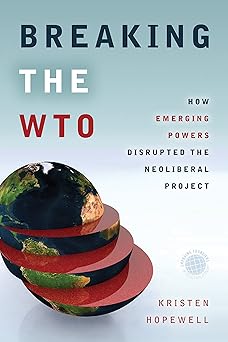
Breaking the WTO
How Emerging Powers Disrupted the Neoliberal Project
Stanford University Press · Print & ebook · August 3, 2016
The world economic order has been upended by the rise of the BRIC nations and the attendant decline of the United States' international influence.
We earn from qualifying purchases.
- Who it’s for
- The book traces how China, India, and Brazil challenged U.S. power at the WTO.
- Genres
- Trade & Tariffs, Globalization, Political Economy
- Published
- Stanford University Press, August 3, 2016
Nearest books
Matched by what the books are about, then ordered by what their readers also loved. Most of these share its genre: Trade & Tariffs.
 The Doom LoopEswar S. Prasad59% match
 Reconstructing the World Trade Organization for the 21st CenturyKent Jones58% match
 Trade Multilateralism in the Twenty-first CenturyAlexei Kireyev, Chiedu Osakwe57% match
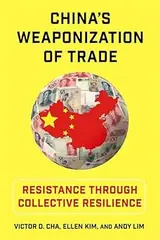 China's Weaponization of TradeVictor Cha, Ellen Kim57% matchAlso shares Political Economy
 World Trade and Investment Law ReimaginedAlvaro Santos, Chantal Thomas57% match
 U.s. Trade PolicyWilliam A. Lovett, Alfred E. Eckes Jr55% match
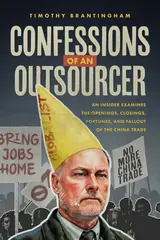 Confessions of an OutsourcerTimothy Brantingham55% match
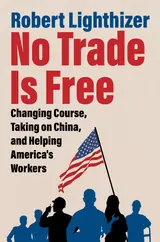 No Trade Is FreeRobert Lighthizer52% match
Start with three books, and this one can be the first.
Members get a new edition every morning: a route out from their books to essays, research and talks, with the reason for each.
Start with this bookAbout this book
The world economic order has been upended by the rise of the BRIC nations and the attendant decline of the United States' international influence. In Breaking the WTO, Kristen Hopewell provides a groundbreaking analysis of how these power shifts have played out in one of the most important theaters of global governance: the World Trade Organization.
Continue reading
Hopewell argues that the collapse of the Doha Round negotiations in 2008 signals a crisis in the American-led project of neoliberal globalization. Historically, the U.S. has pressured other countries to open their markets while maintaining its own protectionist policies. Over the course of the Doha negotiations, however, China, India, and Brazil challenged America's hypocrisy. They did so not because they rejected the multilateral trading system, but because they embraced neoliberal rhetoric and sought to lay claim to its benefits. By demanding that all members of the WTO live up to the principles of "free trade," these developing states caused the negotiations to collapse under their own contradictions. Breaking the WTO probes the tensions between the WTO's liberal principles and the underlying reality of power politics, exploring what the Doha conflict tells us about the current and coming balance of power in the global economy.
Doha at the WTO
The book traces how China, India, and Brazil challenged U.S. power at the WTO.
Come here for
- The Doha Round’s collapse in 2008
- Tensions between WTO principles and power politics
Expect
- U.S. pressure for open markets alongside its protectionist policies
- How emerging powers invoked free-trade principles
Where it sits
| Trade & Tariffs | 87% |
|---|---|
| Political Economy | 37% |
| Globalization | 28% |
Percentages are BookFrontier’s reading of the book.
Publisher categories
- Sociology
- Authors
- Kristen Hopewell
- Publisher
- Stanford University Press
- Published
- August 3, 2016
- Format
- Print & ebook
- Reading lane
- Sociology