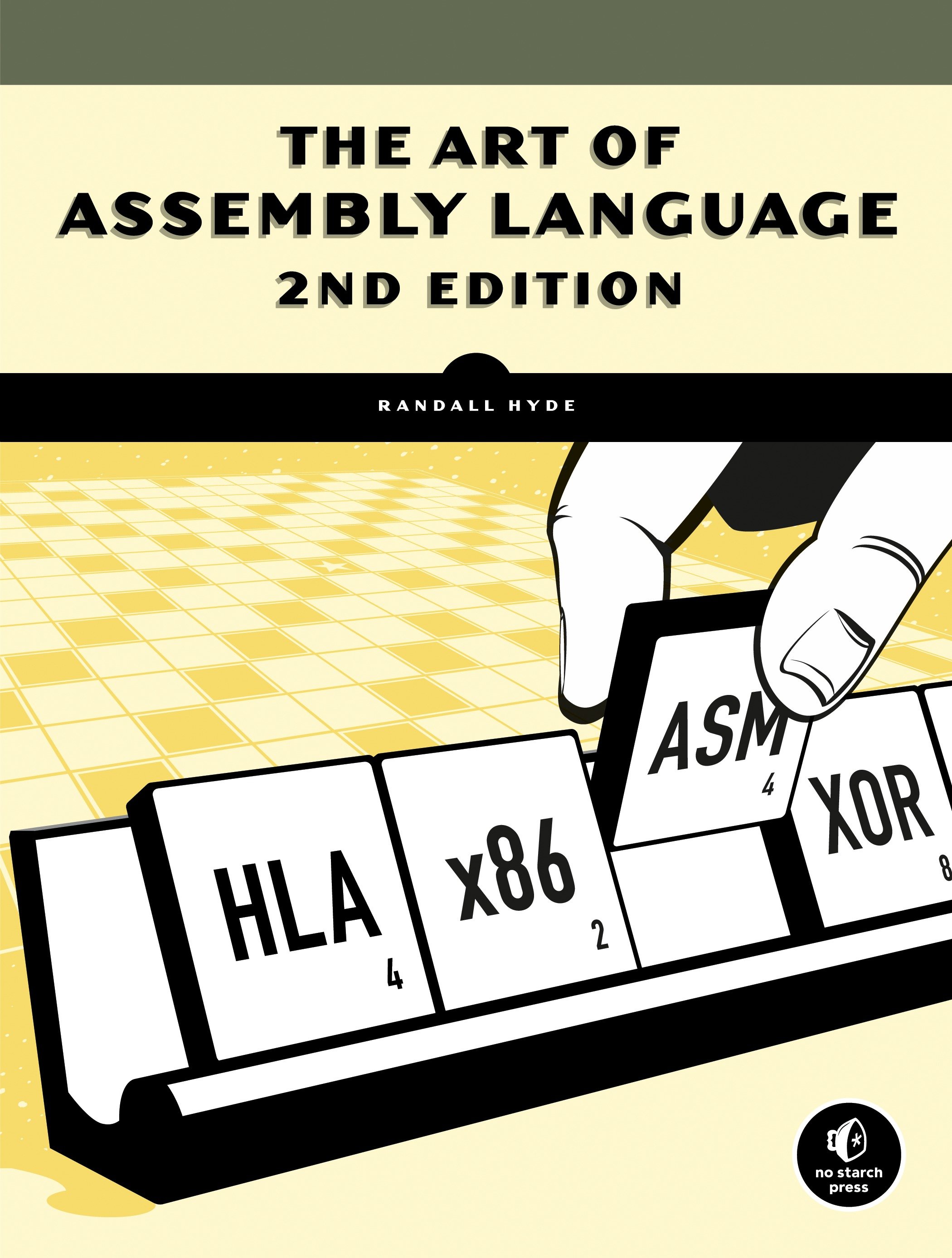
The Art of Assembly Language, 2nd Edition
2nd Edition
No Starch Press · Print & ebook · March 1, 2010
Assembly is a low-level programming language that's one step above a computer's native machine language.
We earn from qualifying purchases.
- Who it’s for
- Learn 32-bit x86 assembly through HLA, with low-level concepts connected to functional code.
- Themes
- 32-bit x86 assembly, Low-level computer science, Writing functional code
- Genres
- Assembly Language Programming, Programming Basics, Computer Science
Nearest books
Matched by what the books are about, then ordered by what their readers also loved.
 Clojure for the Brave and TrueDaniel Higginbotham45% matchShares Programming Basics
 Assembly Language Step-by-stepJeff Duntemann73% matchShares Assembly Language Programming
 Professional Assembly LanguageRichard Blum73% matchShares Assembly Language Programming and Programming Basics
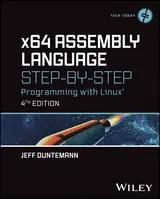 X64 Assembly Language Step-by-stepJeff Duntemann67% matchShares Assembly Language Programming
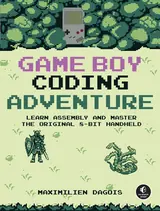 Game Boy Coding AdventureMaximilien Dagois57% matchShares Assembly Language Programming
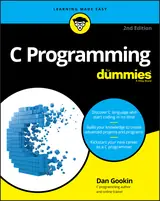 C Programming for DummiesDan Gookin57% matchShares Programming Basics
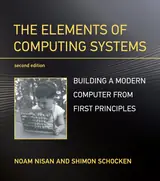 The Elements of Computing Systems, Second EditionNoam Nisan, Shimon Schocken54% matchShares Programming Basics and Computer Science
 Hacker's DelightHenry S. Warren53% matchShares Computer Science
For younger readers: Python for Kids, 2nd Edition, Scratch 3 Programming Playground
Start with three books, and this one can be the first.
Members get a new edition every morning: a route out from their books to essays, research and talks, with the reason for each.
Start with this bookAbout this book
Assembly is a low-level programming language that's one step above a computer's native machine language. Although assembly language is commonly used for writing device drivers, emulators, and video games, many programmers find its somewhat unfriendly syntax intimidating to learn and use. Since 1996, Randall Hyde's The Art of Assembly Language has provided a comprehensive, plain-English, and patient introduction to 32-bit x86 assembly for non-assembly programmers.
Continue reading
Hyde's primary teaching tool, High Level Assembler (or HLA), incorporates many of the features found in high-level languages (like C, C++, and Java) to help you quickly grasp basic assembly concepts. HLA lets you write true low-level code while enjoying the benefits of high-level language programming. As you read The Art of Assembly Language, you'll learn the low-level theory fundamental to computer science and turn that understanding into real, functional code. You'll learn how to: –Edit, compile, and run HLA programs –Declare and use constants, scalar variables, pointers, arrays, structures, unions, and namespaces –Translate arithmetic expressions (integer and floating point) –Convert high-level control structures This much anticipated second edition of The Art of Assembly Language has been updated to reflect recent changes to HLA and to support Linux, Mac OS X, and FreeBSD. Whether you're new to programming or you have experience with high-level languages, The Art of Assembly Language, 2nd Edition is your essential guide to learning this complex, low-level language.
32-bit x86 Assembly
Learn 32-bit x86 assembly through HLA, with low-level concepts connected to functional code.
Come here for
- An introduction to 32-bit x86 assembly using High Level Assembler
- Practice with variables, pointers, arrays, structures, and unions
Expect
- Guidance on editing, compiling, and running HLA programs
- Coverage of arithmetic expressions and high-level control structures
Where it sits
| Assembly Language Programming | 100% |
|---|---|
| Computer Science | 36% |
| Programming Basics | 30% |
Percentages are BookFrontier’s reading of the book.
Publisher categories
- Computer Science
- Programming Basics
- Assembly Language Programming
- Authors
- Randall Hyde
- Publisher
- No Starch Press
- Published
- March 1, 2010
- Format
- Print & ebook
- Theme
- 32-bit x86 assembly · Low-level computer science · Writing functional code
- Reading lane
- Computer Science