Choosing Early Modern History Books for Documents, Case Studies, and Interpretation
Choose by evidence and reading structure: first-hand accounts, art-world documents, major intellectual texts, book biographies, interpretive essays, literary criticism, or a course survey.
Edited by Chris · updated 2026-08-12
Start here
Which early modern history books are best for learning through primary documents, book case studies, and intellectual biography rather than only chronological narrative?
Start with A Political History of Tudor and Stuart England when your priority is working directly with primary accounts. Its student-facing sourcebook spans 1485 through Queen Anne and places opposing political and confessional accounts side by side. Choose The European World 1500–1800 when you need a concise introduction across early modern Europe with extracts, maps, prompts, and reference aids; choose The Books That Made the European Enlightenment when you want twelve book-centered case studies from inception through reception; and choose Renaissance Art Reconsidered when your source work centers on Renaissance art and its production.
[3][6][4][2]The books
Recommended books
For comparing Tudor and Stuart political accounts first-hand
A Political History of Tudor and Stuart England
You get a single-volume selection spanning 1485 through Queen Anne. Yorkist and Lancastrian, Protestant and Catholic, and Roundhead and Cavalier accounts are juxtaposed, making first-hand comparison the practical payoff. The trade-off is its specifically English political focus.
- Best for
- Students who want to examine early modern English political institutions and events through opposing accounts placed side by side.
- Not for
- Readers seeking a Europe-wide introduction to social, cultural, economic, religious, and political developments.
For studying Renaissance art through primary documents
Renaissance Art Reconsidered
You work with letters, treatises, contracts, inventories, and public documents, many translated into English for the first time. Coverage extends beyond Italy to European, Mediterranean, and post-Byzantine art. Its anthology and reference structure supports modular document-centered reading; the trade-off is sustained attention to art, media, places, and production practices rather than general history.
- Best for
- Renaissance and art-history coursework focused on art's production contexts and the textual records surrounding them.
- Not for
- Readers seeking a general political chronology of early modern Europe.
For reading seventeenth-century ideas alongside major texts
The Seventeenth Century
The book sets intellectual developments from 1600 to 1715 alongside major selections from Discourse on Method, Passions of the Soul, Leviathan, and Second Treatise on Government. You get sustained engagement with named primary texts in their period context; the trade-off is a reading path anchored to those works and intellectual themes.
- Best for
- Readers investigating seventeenth-century intellectual change through major selections from Descartes, Hobbes, and Locke.
- Not for
- Readers who specifically want a documentary collection organized and labeled as a sourcebook or anthology.
For following the histories of Enlightenment books
The Books That Made the European Enlightenment
Each chapter gives the biography of a book, tracing it from inception through publication and reception while combining book history with intellectual history. You get a case-by-case narrative and analytical structure. The trade-off is that books and their circulation are the central subjects, not an individual thinker's life or a documentary corpus.
- Best for
- Readers who prefer twelve discrete histories of books, following inception, publication, reception, and relationships among authors, publishers, and readers.
- Not for
- Readers seeking a person-centered intellectual biography, an anthology of reproduced documents, or a continuous chronological survey.
For debating Britain around 1688 in a seminar
Liberty Secured?
The essays reject treating the Revolution itself as an epoch-making event and present it as a conjunction of trends and changes developing across the surrounding years. You get an argument-centered, essay-by-essay structure suited to interpretive discussion; the trade-off is concentration on a British historical problem rather than chronological overview.
- Best for
- Seminar readers evaluating an interpretive thesis about the Revolution of 1688–89 and developments across the years before and after it.
- Not for
- Readers who want a primary-source collection or a general introduction to early modern Europe.
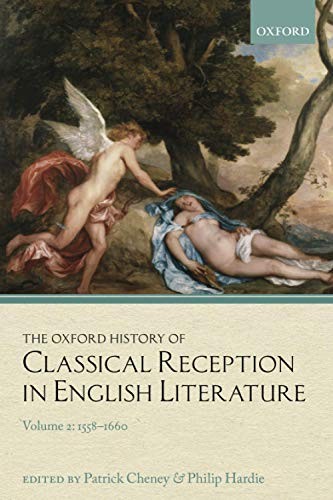
For close study of classical reception in English literature
The Oxford History of Classical Reception in English Literature
You get a multi-contributor critical history of 1558–1660, with close analysis of English literary texts, scholarly synthesis, new research, chapters on writers and contexts, and an annotated bibliography. It provides a chapter-based, research-oriented route into literary reception; the trade-off is its specialized focus on classical reception in English literature.
- Best for
- Readers pursuing close analysis of how English Renaissance writers refashioned classical texts and how institutions and contexts shaped that reception.
- Not for
- Readers seeking an introductory political or social history of early modern Europe.
For building a course-oriented overview of Europe, 1500–1800
The European World 1500–1800
You get a concise introduction with primary-source extracts, maps, discussion prompts, further reading, a glossary, chronology, and index. Recurring reader reports describe an introductory or overview reading experience and university-module use, reinforcing its course-oriented design. The trade-off is that extracts form one component of a broad survey rather than the organizing structure for sustained document study.
- Best for
- Students wanting a course scaffold across early modern Europe's social, economic, religious, cultural, and political developments, supplemented by extracts, maps, prompts, and reference aids.
- Not for
- Readers who want primary documents to organize the whole book or who want every chapter to follow one tightly bounded book case study.
Choose by what matters to you
Choose the evidence format you want to work with
A Political History of Tudor and Stuart England places opposing political and confessional accounts side by side. Renaissance Art Reconsidered gathers letters, treatises, contracts, inventories, and public documents about art and its production. The Seventeenth Century uses major selections from named works by Descartes, Hobbes, and Locke. The European World 1500–1800 includes primary-source extracts as one part of an introductory survey with study aids rather than organizing the book as a sourcebook.
[3][2][5][6]Decide whether the case-study subject should be a book
The Books That Made the European Enlightenment treats twelve books as its cases, following each from inception through publication and reception. Choose it for book-centered intellectual history, not for an intellectual biography centered on one person's life and relationships.
[4]Choose an argument, critical chapters, or an overview
Liberty Secured? develops an interpretive thesis through essays about Britain around 1688. The Oxford History of Classical Reception in English Literature uses multi-contributor chapters, scholarly synthesis, and close critical analysis. The European World 1500–1800 supplies a concise introductory survey with discussion prompts and reference aids.
[1][7][6]Match the scope and date range to your project
Choose A Political History of Tudor and Stuart England for English politics from 1485 through Queen Anne; Renaissance Art Reconsidered for Renaissance art and production contexts extending beyond Italy; The European World 1500–1800 for a wide survey of European developments; or the Oxford classical-reception volume for English literature from 1558 to 1660.
[3][2][6][7]Look for explicit course positioning when you want instructional support
A Political History of Tudor and Stuart England addresses students, Renaissance Art Reconsidered is positioned for Renaissance courses and student reference, and The European World 1500–1800 is an introduction with prompts, further reading, a glossary, chronology, and index. Recurring reader reports also describe The European World 1500–1800 as an introductory overview used in university modules.
[3][2][6][8]What to know before choosing
Useful context
- The two document-led routes use distinct evidence: political and confessional accounts in Tudor and Stuart England, and textual records of Renaissance art and its production. The European World 1500–1800 is instead an introductory survey in which extracts accompany maps, prompts, and reference aids. [3][2][6]
- The Books That Made the European Enlightenment structures the years 1699–1780 as twelve biographies of books, balancing authors, publishers, and readers as each case moves from inception through reception. [4]
- Liberty Secured? and the Oxford classical-reception volume are interpretation-centered works: one advances a thesis through essays, while the other combines scholarly synthesis with close analysis in separate chapters. [1][7]
- The Seventeenth Century presents intellectual developments from 1600 to 1715 alongside major selections from works by Descartes, Hobbes, and Locke. [5]
Sources
- Liberty Secured?BookFrontier · checked 2026-08-12
- Renaissance Art ReconsideredBookFrontier · checked 2026-08-12
- A Political History of Tudor and Stuart EnglandBookFrontier · checked 2026-08-12
- The Books That Made the European EnlightenmentBookFrontier · checked 2026-08-12
- The Seventeenth CenturyBookFrontier · checked 2026-08-12
- The European World 1500–1800BookFrontier · checked 2026-08-12
- The Oxford History of Classical Reception in English LiteratureBookFrontier · checked 2026-08-12
- Reader perspectives on The European World 1500–1800Goodreads reader reviews · checked 2026-03-02