
Native Listening
Language Experience and the Recognition of Spoken Words
MIT Press · Print & ebook · January 30, 2015
An argument that the way we listen to speech is shaped by our experience with our native language.
We earn from qualifying purchases.
- Who it’s for
- Readers interested in psycholinguistics and speech perception
- Themes
- Native-language speech perception, Spoken-word recognition, Cross-linguistic listening
- Genres
- Psycholinguistics, Phonetics & Phonology, How We Think & Learn
Nearest books
Matched by what the books are about, then ordered by what their readers also loved.
 Third EarElizabeth Rosner59% match
 The Power of LanguageViorica Marian56% matchShares Psycholinguistics and How We Think & Learn
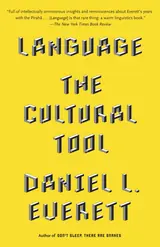 LanguageDaniel L. Everett54% match
 Language Vs. RealityN.J. Enfield53% matchShares Psycholinguistics
 Speaking in TonguesJ. M. Coetzee, Mariana Dimópulos52% match
 The Power of BabelJohn McWhorter52% match
 Language DevelopmentRobert E. Owens52% matchShares Phonetics & Phonology
 LinguaphileJulie Sedivy52% matchShares Psycholinguistics
For younger readers: Listen and Learn, Listening Time / Momento Para Escuchar, Love in English
Start with three books, and this one can be the first.
Members get a new edition every morning: a route out from their books to essays, research and talks, with the reason for each.
Start with this bookAbout this book
An argument that the way we listen to speech is shaped by our experience with our native language. Understanding speech in our native tongue seems natural and effortless; listening to speech in a nonnative language is a different experience. In this book, Anne Cutler argues that listening to speech is a process of native listening because so much of it is exquisitely tailored to the requirements of the native language.
Continue reading
Her cross-linguistic study (drawing on experimental work in languages that range from English and Dutch to Chinese and Japanese) documents what is universal and what is language specific in the way we listen to spoken language. Cutler describes the formidable range of mental tasks we carry out, all at once, with astonishing speed and accuracy, when we listen. These include evaluating probabilities arising from the structure of the native vocabulary, tracking information to locate the boundaries between words, paying attention to the way the words are pronounced, and assessing not only the sounds of speech but prosodic information that spans sequences of sounds. She describes infant speech perception, the consequences of language-specific specialization for listening to other languages, the flexibility and adaptability of listening (to our native languages), and how language-specificity and universality fit together in our language processing system. Drawing on her four decades of work as a psycholinguist, Cutler documents the recent growth in our knowledge about how spoken-word recognition works and the role of language structure in this process. Her book is a significant contribution to a vibrant and rapidly developing field.
Where it sits
| Psycholinguistics | 88% |
|---|---|
| How We Think & Learn | 51% |
| Phonetics & Phonology | 44% |
Percentages are BookFrontier’s reading of the book.
Publisher categories
- Psycholinguistics
- Authors
- Anne Cutler
- Publisher
- MIT Press
- Published
- January 30, 2015
- Format
- Print & ebook
- Theme
- Native-language speech perception · Spoken-word recognition · Cross-linguistic listening
- Reading lane
- Psycholinguistics