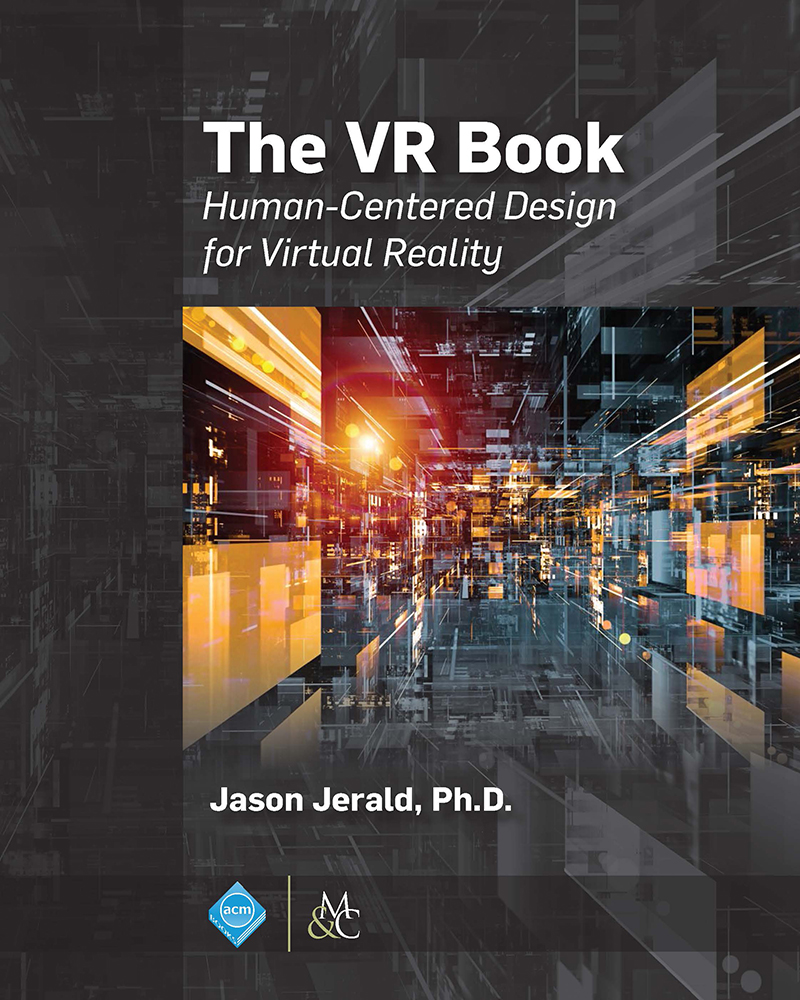
The Vr Book
Human-centered Design for Virtual Reality
Morgan & Claypool Publishers · Print & ebook · September 1, 2015
This is a strong foundation of human-centric virtual reality design for anyone and everyone involved in creating VR experiences.
We earn from qualifying purchases.
- Who it’s for
- Jason Jerald examines how people perceive, interact with, and respond to virtual reality experiences.
- Themes
- Human-centered VR design, Perception and interaction in VR, VR sickness and user experience
- Genres
- Virtual Worlds, Human-Computer Interaction, UI/UX Design
Nearest books
Matched by what the books are about, then ordered by what their readers also loved. Most of these share its genre: Human-Computer Interaction.
 Design for How People ThinkJohn Whalen58% matchAlso shares UI/UX Design
 The Art of Game DesignJesse Schell57% match
 The Design of Everyday ThingsDon Norman55% match
 Elements of User Experience, theJesse James Garrett54% matchAlso shares UI/UX Design
 Designing GamesTynan Sylvester53% match
 Designing InteractionsBill Moggridge53% match
 Designing Web NavigationJames Kalbach53% matchAlso shares UI/UX Design
 A Playful Production ProcessRichard Lemarchand53% match
For younger readers: Game On!, Slaying Digital Dragons ™
Start with three books, and this one can be the first.
Members get a new edition every morning: a route out from their books to essays, research and talks, with the reason for each.
Start with this bookAbout this book
This is a strong foundation of human-centric virtual reality design for anyone and everyone involved in creating VR experiences. Without a clear understanding of the human side of virtual reality (VR), the experience will always fail. The VR Bookbridges this gap by focusing on human-centered design. Creating compelling VR applications is an incredibly complex challenge.
Continue reading
When done well, these experiences can be brilliant and pleasurable, but when done badly, they can result in frustration and sickness. Whereas limitations of technology can cause bad VR execution, problems are oftentimes caused by a lack of understanding human perception, interaction, design principles, and real users. This book focuses on the human elements of VR, such as how users perceive and intuitively interact with various forms of reality, causes of VR sickness, creating useful and pleasing content, and how to design and iterate upon effective VR applications. This book is not just for VR designers, it is for managers, programmers, artists, psychologists, engineers, students, educators, and user experience professionals. It is for the entire VR team, as everyone contributing should understand at least the basics of the many aspects of VR design. The industry is rapidly evolving, and The VR Book stresses the importance of building prototypes, gathering feedback, and using adjustable processes to efficiently iterate towards success. It contains extensive details on the most important aspects of VR, more than 600 applicable guidelines, and over 300 additional references.
Human-Centered VR
Jason Jerald examines how people perceive, interact with, and respond to virtual reality experiences.
Come here for
- Human perception and intuitive interaction in VR
- Causes of VR sickness and design principles
Expect
- More than 600 applicable design guidelines
- Guidance on prototyping, feedback, and iteration
Where it sits
| Virtual Worlds | 97% |
|---|---|
| Human-Computer Interaction | 82% |
| UI/UX Design | 35% |
Percentages are BookFrontier’s reading of the book.
Publisher categories
- Game Dev
- Computer Science
- Programming Basics
- Authors
- Jason Jerald
- Publisher
- Morgan & Claypool Publishers
- Published
- September 1, 2015
- Format
- Print & ebook
- Theme
- Human-centered VR design · Perception and interaction in VR · VR sickness and user experience
- Reading lane
- Game Dev